



































Kash Legal founder: Jonathan M. Kashani
Introduction
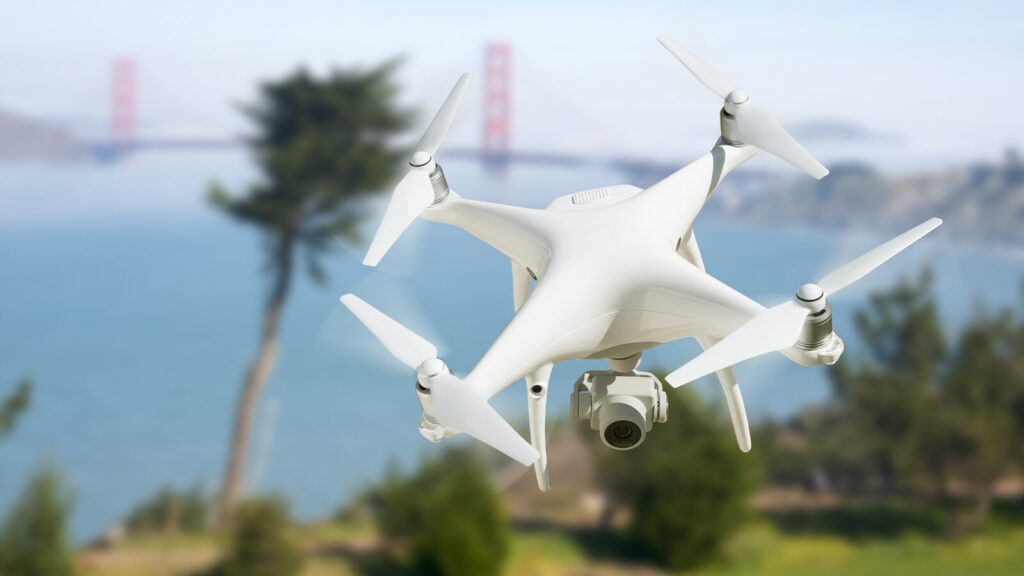
California’s airspace is among the busiest and most complex in the United States. With major airports such as Los Angeles International Airport (LAX), San Francisco International Airport (SFO) and San Diego International Airport (SAN) handling millions of passengers annually, the safety of manned aircraft operations is a top priority. At the same time, the proliferation of unmanned aircraft systems (UAS, often referred to as “drones”) for recreational, commercial, and industrial use has created new intersections of risk.
In California, where urban sprawl, dense population centers, and high‑traffic air corridors coincide, drone‑related aviation safety incidents are an increasing concern. Reports of near‑misses, airspace incursions, and drone interference with manned flights are mounting. For individuals or organizations impacted by such incidents, specialized legal guidance is often needed. (Individuals in California affected by aviation mishaps may turn to experienced law firms such as Kash Legal Group for help.)
This article explores the nature of drone‑related aviation accident risk in California, reviews key statistics, examines regulatory and technological mitigation, offers legal considerations, and includes testimonials and FAQs.



Drone Incidents and Airspace Risk in California
Rising Numbers of Drone Sightings
According to reporting by the Federal Aviation Administration (FAA), drone sightings and reported encounters have increased dramatically nationwide and in California. For instance:
- A CBS Los Angeles article notes that reports of drones have “increased dramatically” since 2014.
- The article further states that between August 2015 and January (year unspecified), California alone had more than 580 reported drone‑sightings in that period.
- Another dataset shows California topping the list of unmanned aircraft encounter reports: 196 reports since May 2014.
- Nationally, U.S. officials reported over 3,000 drone events near airports since 2021, with some occurring in California.
- A report states that as of October 1, 2024 there were approximately 800,000 drones registered with the FAA nationwide.
- A California state Department of Transportation document shows that from 2006 to August 2023, 27 UAS accidents were reported in the U.S., of which seven occurred in California.
Risk Factors in California’s Airspace
The high number of drones registered and operating in California increases the potential for near‑conflicts with manned aircraft. The document cited above emphasizes that California has one of the highest concentrations of UAS per capita for both recreational and commercial use.
Drones near airports can interfere with approach paths, departures, and emergency air operations (such as firefighting aircraft). A 2025 incident in Los Angeles is illustrative: a drone collided with a fire‑fighting aircraft over the Palisades Fire, damaging a wing and grounding a “Super Scooper.”
Types of Incidents
- Near‑misses: drones inadvertently flying into controlled airspace or near landing/take‑off paths.
- Collision with manned aircraft: while rare, have occurred (e.g., the firefighting aircraft incident).
- Airspace incursions during special operations (e.g., firefighting, medical flights) leading to operational disruption.
- Drone interference causing flight delays or diversions, which in turn can create safety vulnerabilities.
Magnitude & Consequences
The magnitude of these incidents can be extensive in California: given the number of registered drones and the number of airports, even a small percentage of mis‑flights can generate a significant number of unsafe events. For example:
- If California has the highest UAS per capita and many airports, it is reasonable to draw a correlation between the volume of drones and the elevated number of encounters.
- The grounding of firefighting aircraft as a result of a drone collision underscores the potential for broader public safety consequences.
Regulatory Landscape & California‑Specific Considerations
Federal Regulations
Key federal rules include:
- Drone operators must stay below 400 feet in altitude, maintain visual line of sight, and avoid manned aircraft.
- Remote identification mandates require drones to broadcast identity and location.
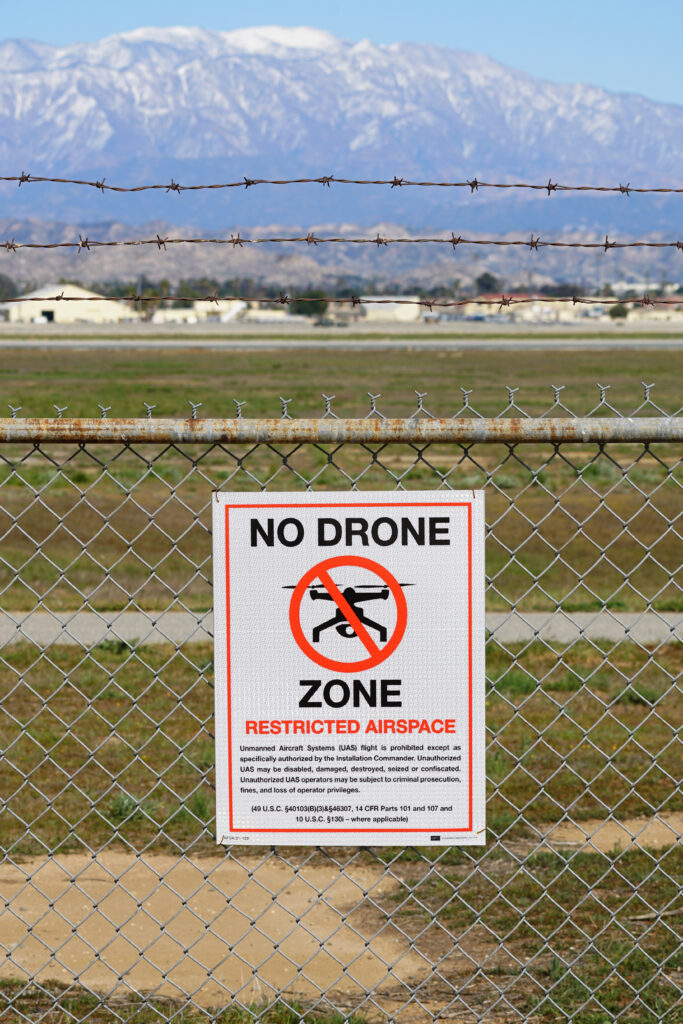
- Unauthorized operations in controlled airspace (e.g., near airports) are subject to fines and criminal penalties.
California and State/Local Considerations
- California’s Department of Transportation documentation points out that the state has high UAS registration and usage numbers, making regulatory compliance especially important.
- Local ordinances: In some state parks and highway corridors in California, drone operations are further restricted. For example, launching drones within certain California State Parks is prohibited unless by special order.
- Enforcement: Even with federal and state rules, unauthorized flights—especially near airports or firefighting zones—remain difficult to monitor and prosecute.
Penalties & Enforcement Actions
- Civil penalties for unauthorized drone flights can be substantial. For example, interfering with firefighting aircraft can result in fines up to $75,000.
- Criminal penalties: Interfering with aircraft during special operations (wildfire suppression) is a federal crime, potentially resulting in prison.
Technology & Mitigation Strategies
Detection and Monitoring Systems
California airports and aviation authorities are increasingly employing technology to reduce drone‑related risk:
- Radar and RF (radio‑frequency) detection systems at airports to identify unauthorized UAS.
- Geofencing technology embedded in many drones that restrict automatic flight into no‑fly zones near airports.
- Counter‑drone measures: airports may deploy non‑lethal means to neutralize rogue drones.
Predictive and AI‑Assisted Systems
Research is ongoing into AI‑based predictive analytics that can detect potential collision paths between drones and aircraft, which may alert pilots or ground control in advance. California DOT reports that increased investment in UAS operations has “created new challenges to their safe and scalable integration” and that pioneering research is required.
Best Practices for Operators and Airports
- Ensuring drone operators register appropriately and follow visual‑line‑of‑sight (VLOS) rules.
- Airports should coordinate with local law enforcement and fire agencies on detection and response plans.
- Public education campaigns: many drone incidents result from ignorance of restrictions.
- During emergency operations (wildfire, medevac), temporary flight restrictions (TFRs) must be prominently communicated and enforced.
Legal Implications & Victim Guidance
Liability Considerations
When a drone‑related aviation safety incident occurs in California, the following liability considerations may apply:
- Drone operator liability: If a drone violates federal/state regulations, the operator may be liable for negligence, civil damages, and potentially criminal sanctions.
- Manufacturer liability: If the drone malfunctions due to a hardware or software defect, manufacturers or distributors may be held accountable under product‑liability or negligence theories.
- Airport/airline duty: Airports and airlines owe a duty to implement reasonable safety measures. If an airport fails to maintain detection systems or coordinate with authorities, liability may be asserted (though these cases are complex).
- Insurance & compensation: Victims (passengers, crew, property‑owners, third‑party individuals) may have rights to compensation depending on fault, regulatory violations, and the extent of damage or injury.
Role of Specialized Legal Firms
Given the technical, regulatory, and aviation‑specific complexities of drone‑related incidents, legal firms that focus on personal injury and aviation accidents can be critical. (Kash Legal Group, a California law firm with offices in Los Angeles, lists substantial experience in personal injury and negligent‑accident claims.)
Why Seek Legal Assistance?
- Investigating technical causes of drone interference (flight data, radar logs, aviation incident reports).
- Tracing liability: who operated the drone, whether regulations were followed, whether detection/prevention systems failed.
- Pursuing compensation for injuries to crew/passengers, damage to aircraft or assets, or operational losses.
- Navigating regulatory enforcement: interacting with FAA investigations, criminal or civil penalties, and protecting client rights.
Case Studies from California
Case A: Firefighting Aircraft vs Drone (Los Angeles)
In January 2025, a drone collided with a CL‑415 “Super Scooper” firefighting aircraft over the Palisades Fire in Los Angeles, resulting in a hole in the wing and temporary grounding of the aircraft. The incident underscores how drone interference can directly impact emergency aviation operations.
Case B: Near‑Miss at LAX
Earlier reporting found that a pilot of a Lufthansa A380 approaching LAX reported a drone passing about 200 feet above the aircraft.
Summary Impact
These incidents show the variety of risks: recreational/high‑hobby drones near airports, commercial drones entering controlled airspace, and critical operations (firefighting, medevac) being compromised. The effect extends beyond potential crash risk to include operational delays, increased costs, and elevated legal risk.
FAQs – Drone‑Related Aviation Accidents in California
Q1: What should I do if a drone flies too close to my aircraft?
A: Immediately report the incident to the FAA via the DroneZone website or hotline. Document time, location, altitude, and any evasive action. If an accident or damage occurs, consult a specialized aviation‑accident attorney experienced in drone liability.
Q2: Are drones dangerous to commercial aircraft?
A: Yes. While complete mid‑air collisions are rare, drones passing within 200–300 feet of aircraft have been reported in California. Such proximity can threaten rotor/engine ingestion during take‑off or landing phases. Data show California has a high number of reported encounters.
Q3: What penalties apply for unauthorized drone flights near airports or wildfire zones?
A: Civil penalties can reach $75,000 for interference with emergency aircraft. Criminal penalties may include up to 12 months’ imprisonment for flying in a Temporary Flight Restriction (TFR) protecting fire‑response aircraft.
Q4: Can victims of drone‑related aviation incidents obtain compensation?
A: Yes. Victims (passengers, crew, ground personnel, property owners) may have claims against drone operators (negligence), manufacturers (product defect), or airports/airlines (failure of safety protocols). A law firm such as Kash Legal Group can assist with evaluation.
Q5: How can airports or operators mitigate risk?
A: Implement drone‑detection systems, coordinate with local law enforcement and fire agencies, enforce geofencing and Remote ID compliance, educate public and hobbyist operators.
Q6: What must California drone operators know?
A: Register the drone with the FAA if weight is over 0.55 lbs.; comply with Part 107 (commercial) or recreational rules; stay below 400 feet, maintain VLOS, avoid flying near airports without authorization, respect state/local ordinances (which may impose additional restrictions).
Recommendations for Stakeholders
- Airports and Aviation Operators: Strengthen detection and response frameworks; upkeep radar/RF sensors; coordinate drills for drone incursion scenarios.
- Regulators and Policymakers: Increase funding for counter‑drone research; update State/Local rules to close loopholes; encourage public education.
- Drone Operators (Commercial and Hobby): Follow all FAA rules including Remote ID; review local ordinances; avoid restricted zones especially near airports and TFRs.
- Victims or Those Affected by Drone‑Related Incidents: Seek legal review from a firm that handles personal injury/aviation accident cases. (Kash Legal Group has a strong review history in California
Conclusion
In California’s high‑traffic skies, the intersection of unmanned and manned aviation presents an evolving safety challenge. The rising number of drone registrations and reported encounters—alongside high‑stakes incidents such as the collision between a drone and firefighting aircraft—demonstrate the need for robust regulation, technological mitigation, and legal preparedness.
Those impacted by a drone‑related aviation safety incident should consider seeking counsel from law firms experienced in aviation and personal injury matters, to navigate complex liability, regulatory interaction, and claim processes.
By combining awareness of the regulatory framework, deployment of detection and mitigation technologies, and professional legal support when needed, stakeholders in California’s airspace can work toward safer skies for everyone.
Kash Legal Group main office: 2839 S Robertson Blvd, Los Angeles, CA 90034
Phone number: (888) 527-4128
Aviation Accidents: KashLegal.com
Client Reviews & Reputation
“Always approachable and friendly—they treated me like a person, not just a client.” –Delilah T, Los Angeles
“Los Angeles office was professional, friendly, and super supportive.” –Grace B, San Diego
“After a serious slip and fall at a local Murrieta grocery store … They were tenacious in proving the store’s negligence and secured a settlement that far exceeded my initial expectations.” –Sage P, San Jose
“My family was devastated after a loved one’s tragic death. The compassion and professionalism of the wrongful death lawyers at Kash Legal Group were incredible.” – Sarah T, Sacramento“Kash Legal not only assisted me with everything I needed but won my car accident case. Will definitely recommend to others.” – Frank, K, Bakersfield
Call: (866) 935-3421
Email: [email protected]
Jonathan M. Kashani is the founder and driving force behind Kash Legal Group, where our motto is simple yet powerful: Kash Wins! Guided by the firm’s core values of Grit, Hard Work, Loyalty, Customer Service, and Winning, Jonathan has built a reputation for relentless advocacy and personalized client care. He believes that every client deserves not only exceptional legal representation, but also the unwavering dedication of a team that fights as if the outcome is personal—because it is.
With a sharp legal mind and an unshakable commitment to justice, Jonathan focuses on personal injury law, helping accident victims recover the compensation they deserve. His mission is to level the playing field against insurance companies, ensuring that each client’s voice is heard and rights are protected.
Jonathan pursued his undergraduate degree in Biological Sciences from the University of California, Los Angeles (UCLA) and his Juris Doctorate with Honors from the University of West Los Angeles School of Law. This strong academic foundation, paired with years of hands-on litigation experience, allows him to craft innovative legal strategies that get results.
Beyond the courtroom, Jonathan is a proud father of three amazing children and an active member of his community. He coaches youth basketball, inspiring young athletes with lessons in teamwork, perseverance, and discipline—values that mirror his legal practice. A passionate music lover, his playlists often feature Bob Dylan, Led Zeppelin, Prince, and Tom Petty. When he’s not advocating for clients, you can find him beach bumming, experimenting in the kitchen, or enjoying quality family time.
For Jonathan, law is more than a profession—it’s a calling. Every case is a chance to change someone’s life for the better, and every client is treated like family. At Kash Legal, we don’t just represent you—we fight for you. And we fight to win.
Education
– University of California, Los Angeles
– Juris Doctorate, University of West Los Angeles, School of Law
Awards & Associations
– State Bar Of California
– AV Preeminent Rated
Martindale-Hubbell
2022
– Client Champion Award
Martindale-Hubbell
2022
– Consumer Attorneys Association Of Los Angeles
2010 – Present
– Expertise: Best Car Accident Lawyers In Los Angeles
2024
Case Results & Settlements
- $2,000,000 Wrongful Death
- $1,250,000 Auto vs. Auto
- $790,000 Commercial Van vs. Auto
- $500,000 Bus Passenger Accident
- $250,000 Auto vs. Auto
Areas Of Expertise
Attorney Endorsements
“I have worked with John on several matters and also referred him cases. He knows about Injuries and focuses on results. I endorse this lawyer.” – Litigation Attorney Nate Kelly
Office Locations:
- Los Angeles (Beverly Hills): 2839 S. Robertson Blvd. Los Angeles CA 90034
- San Diego: 8775 Aero Dr Suite 138, San Diego, CA 92123 | (619) 650-5845
- Chula Vista: 750 Otay Lakes Rd, Chula Vista, CA 91910 | (619) 378-9288
- Reseda: 18355 Sherman Way, Reseda, CA 91335 | (747) 298-5611
- Murrieta: 25185 Madison Ave, Murrieta, CA 92562 | (951) 651-0774
- Temecula: 27555 Ynez Rd, Temecula, CA 92591 | (951) 484-1550
- Victorville: 14393 Park Ave, Victorville, CA 92392 | (760) 454-1654
- Hesperia: 17096 Sequoia St., Hesperia CA 92345 | (760) 919-4264
- Bakersfield: 2020 Eye St, Bakersfield, CA 93301 | (661) 460-2500
- Palm Desert: 74333 CA-111, Suite 205, Palm Desert, CA 92260 | (760) 529-8181
- Fresno: 4270 N Blackstone Ave Suite 201, Fresno, CA 93726 | (559) 551-2688
- Sacramento: 3626 Fair Oaks Blvd, Sacramento, CA 95864 | (916) 892-1263
- Roseville: 2999 Douglas Blvd Suite #180H, Roseville, CA 95661 | (916) 252-1165
- Oakland: 1300 Clay St, Oakland, CA 94612 | (510) 800-8293
- Pleasant Hill: 3478 Buskirk Ave suite 1054, Pleasant Hill, CA 94523 | (925) 940-9840
- Vacaville: 201 E Monte Vista Ave, Vacaville, CA 95688 | (707) 883-1555
- Fairfield: 1545 N Texas St, Fairfield, CA 94533 | (707) 881-9205
- San Jose: 111 North Market Street, Suite 300, San Jose, CA 95113
- Cupertino: 10080 N Wolfe Rd, Cupertino, CA 95014 | (818) 383-7478
- San Mateo: 1900 S Norfolk St #388, San Mateo, CA 94403 | (650) 629-1595