

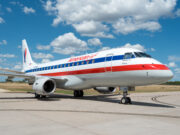

































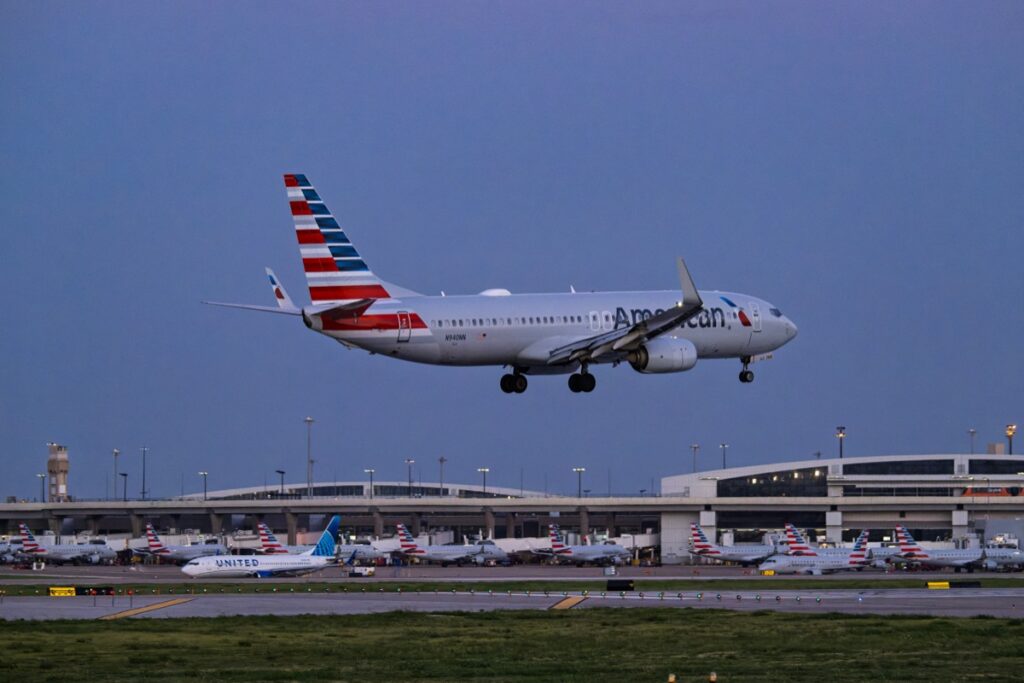
American Airlines is doubling down on Dallas/Fort Worth International Airport with a $4 billion terminal expansion that will add 31 gates and extend its lease at the airport through 2043.
Construction on Terminal F is already underway. The first 15 gates are scheduled to open in 2027, with the full 31-gate build-out completing in 2030. American will be the exclusive tenant. The terminal will include a new SkyLink station, an automated baggage system, biometric scanning at international gates, and self-serve check-in kiosks — all designed to move connecting passengers through the airport faster.
DFW’s stated strategy for the project is ‘Forever Forward at DFW: A Connection Machine,’ which accurately describes what the airport does for American’s network. American currently operates just over 900 daily departures out of DFW across 13 flight banks, putting it just below Delta’s nearly 1,000 daily departures out of Hartsfield-Jackson Atlanta — a gap that makes DFW and ATL the two largest airline hub operations in the country by a wide margin.
For crew based at DFW or holding lines through it, the expansion signals continued — and likely growing — flying out of the station well into the next decade. A 31-gate addition to an already dominant hub means more banks, more turns, and more connecting traffic. The lease extension to 2043 removes any ambiguity about American’s long-term commitment to the airport.





The economics behind the investment are straightforward. American operates at significantly lower costs at DFW than at its competitive hubs in New York, Chicago, or Los Angeles. Its dominance at the airport gives it leverage that translates directly to favorable operating costs. The same dynamic plays out at Charlotte Douglas, where American runs over 670 daily departures. Between DFW and CLT, American has built a two-hub cost structure that underpins its entire network strategy.
Geographically, DFW sits far enough west that it doesn’t capture the dense east-to-east passenger flows that make ATL so productive, but it is well-positioned for east-west connections and serves one of the largest and fastest-growing metropolitan regions in the country. The Dallas/Fort Worth area has seen sustained growth in both business and premium leisure demand, making the local market increasingly valuable independent of connecting traffic.
American is also the most Sun Belt-exposed of the three legacy carriers. Delta’s only hub in the region is Atlanta. United’s is Houston. American has Phoenix, Miami, Charlotte, and DFW all positioned within or adjacent to the Sun Belt — the part of the country that has seen the most consistent population and economic growth. Terminal F is, in part, a bet that those trends continue.
The scope of the project — $4 billion, a 17-year lease extension, exclusive tenancy — puts American’s strategic priorities in plain terms. DFW is not one hub among ten. It is the centerpiece of the network, and the airline is building infrastructure to keep it that way.