

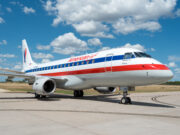


























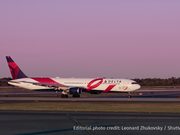






An American Airlines crew at Atlanta declined a takeoff clearance on September 13 because they wanted more separation behind a departing Boeing 757. The exchange turned into an argument with the tower controller, who responded by warning of a possible pilot deviation. The crew was within their rights. The controller’s technical position on separation was correct, but the deviation warning was not.
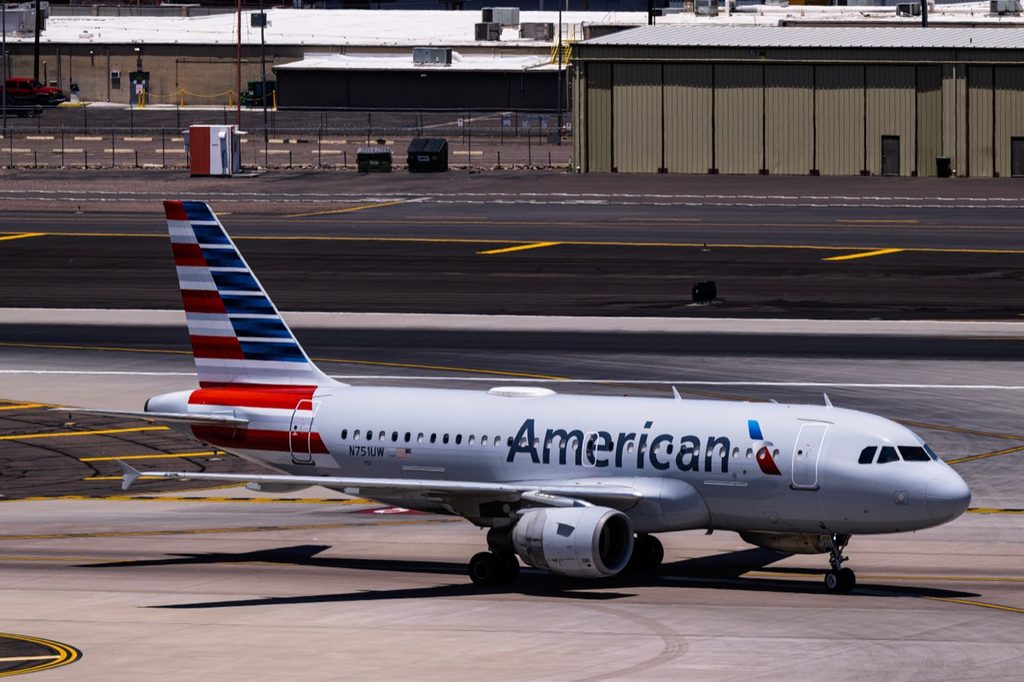
American flight 1428, an Airbus A319 registered N812AW, was lined up on runway 27 Right waiting to depart for Philadelphia. When the tower issued the takeoff clearance, the crew asked for more time: “Yeah, we need a little bit more time for that separation.” The controller canceled the clearance and directed them off the runway via taxiway Mike 20.
The controller also told the crew that if they needed more than standard separation in the future, they should notify the tower before taxiing onto the runway — a legitimate operational point. The crew had to wait while another aircraft took their slot in the departure sequence, and the controller arranged a new departure release toward Philadelphia.
Then the American pilot pushed back on the controller’s handling of the original clearance. He noted that pilots do not carry ATC separation manuals in the flight deck, argued that clearing an aircraft behind a 757 with calm winds was improper for wake turbulence, and told the controller to “do your job.” The controller’s response: “American 1428, possible pilot deviation. Advise ready to copy phone number.”



On the separation question, the controller had the facts. A Boeing 757 falls under wake turbulence category E; an A319 is category F. The applicable separation tables do not require an additional wake interval between those two aircraft types. An A319 is smaller than a 757 but does not fall into the “small aircraft” classification that triggers mandatory additional spacing. Standard departure separation — the preceding aircraft airborne and at least 6,000 feet ahead before the following aircraft begins its takeoff roll — applied here.
But being technically correct on spacing does not mean the crew had to go. Under federal regulations, the pilot in command is the final authority on the operation of the aircraft. A crew can decline a clearance they believe puts the aircraft at risk and request a revised one. That is what flight 1428 did. No emergency declaration was required. They needed a new clearance and revised taxi instructions, both of which they received.
The pilot deviation warning is a formal notification to a crew that the controller believes their actions may have violated a regulation. It prompts the crew to document events while details are fresh and signals that a report may follow. Here, it arrived immediately after the pilot told the controller to “do your job.” The source notes the controller’s own words to a subsequent crew on the frequency: “I’ve been doing it for 26 years. I don’t need some pilot telling me how to do my job.”
For working crews, the takeaway is straightforward. If extra wake separation is needed, raise it before taxiing onto the runway — controllers need that information early enough to manage the sequence. Once on the runway, the crew retains the right to decline a clearance. Relitigating ATC separation policy on a live frequency, with other aircraft waiting, is a different matter. The American pilot’s technical concern about calm-wind wake turbulence was reasonable; the tone of the exchange made a routine disagreement into a confrontation.
The FAA will determine whether any violation occurred. Wake turbulence behind a 757 is not theoretical — it is among the most hazardous in the commercial fleet, particularly in calm conditions when the vortices linger on the runway heading.