










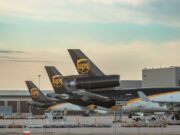









































UPS has largely walked away from Amazon's last-mile delivery work, a deliberate restructuring that strips out millions of shipments per day in exchange for better margins.
The drawdown began in earnest in early 2025, when UPS announced it would cut Amazon-related volume by more than 50 percent through 2026. By mid-2026, UPS had phased out standard last-mile delivery for Amazon across its major markets. The company is not severing the relationship entirely — UPS Stores will still handle Amazon returns, the carrier will continue managing marketplace seller logistics and long-distance freight, and last-mile fulfillment continues in rural areas and during peak seasons.
Amazon had been UPS's largest customer. In 2024 and 2025, Amazon accounted for roughly 11 percent of UPS revenue. That figure dropped below 9 percent in the first half of 2026 and is expected to fall further in the second half.
The rationale is margin, not revenue. Amazon's last-mile work congested UPS sorting facilities and returned lower profits than longer-haul deliveries. Management decided the volume was not worth the squeeze.





To replace that business, UPS is targeting small- and medium-sized shippers and healthcare customers — segments with better margin profiles. The company is also closing some facilities, trimming its workforce, and expanding automation.
For 2026, UPS projects revenue of $91.2 billion, a 3 percent increase, with adjusted earnings per share growing 1 percent to $7.22. Modest numbers, but they would represent the first time since 2022 that both metrics have grown simultaneously.
The comparison point in the industry is FedEx, which cut ties with Amazon entirely in 2019. UPS's approach is more selective — preserving parts of the Amazon relationship while shedding the high-volume, low-margin work that was dragging on profitability.
For crew at UPS Airlines and ground operations, the volume reduction has already translated into facility closures and workforce reductions. The carrier's bet is that the business it brings in to replace Amazon's packages will be denser in revenue per shipment, making the network more efficient to operate even with lower total piece counts.