








































My first mission was risky. The woman was being held at a hospital until we could transport her to a safe location. Her trafficker had already shown up once, intending to take her back. We didn’t know if he would return—or if he was watching. Time mattered, but so did precision.
A plan came together quickly. She would be escorted under protection, accompanied by an armed guard. A private investigator would follow to make sure they weren’t being tracked. Every step, from the hospital room to the airport, had to be intentional. There was no margin for error. Every decision had consequences, and every delay carried risk.
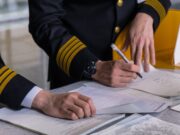
I remember waiting at the airport, going over every detail in my mind. Weather, route, alternates, those were the easy parts. The real weight of the mission sat in the back of my mind: this flight mattered in a way none of my other flights ever had.
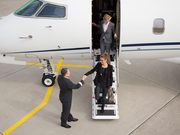
When she finally arrived, you could see both fear and hope in her eyes. We quickly escorted her to the airplane, got her settled in, and as soon as the wheels lifted off the runway, something changed. She exhaled. She knew she was safe.





And then, just like that, she became a passenger. Curious, light, even joyful. During the flight, she repeatedly asked if we were going to descend. I finally asked her why. She said, “I want to go through a cloud.”
So, we maneuvered slightly, found a small one, and flew right through it. She laughed out loud with pure unfiltered joy. It was the kind of laughter that comes from relief, from release, from realizing, maybe for the first time in a long time, she was somewhere safe.
In that moment, I realized something profound: aviation wasn’t just my passion anymore. It had become my purpose.
Falling in Love with Flight
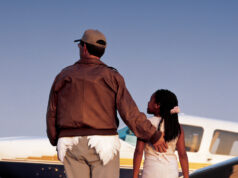
Like so many nine-year-olds, I played on a softball team. Our sponsor, Sheriff Ross, surprised us one day at the end of the season, he was going to take us flying.
I still remember running out to see his airplane with the other girls, full of excitement. We couldn’t all go at once, so we took turns. When it was my turn, I squeezed into the middle of the backseat, straining to see out the window. That was it. I fell in love with flying.
Something about being in the air changed my perspective. I felt peace up there that I had never experienced before. Looking down at the world, I knew, even at nine years old, that I wanted to be a pilot. It wasn’t just the view—it was the feeling, the calm, the clarity. I felt the sense that, somehow, everything made a little more sense from above.
The path wasn’t simple. Life took me in different directions, and for a time, flying had to take a back seat as I raised my family. But the dream never died.
Years later, I found my way back, one step at a time, one lesson at a time, one rating at a time. Eventually, I found myself back in the cockpit, flying professionally, now as a captain. It didn’t happen overnight. It took sacrifice, persistence, and a willingness to start again when it would have been easier not to.
I thought I was returning to a passion. I didn’t realize it was about to become something much bigger.
The Moment Everything Changed
In 2020, I became involved in efforts to support survivors of human trafficking. What I quickly learned was this: human trafficking is not rare. It’s not distant. And it doesn’t look like what most people think. It’s happening in every state in this country.
Right now, an estimated 27.6 million people are being exploited worldwide, and the industry generates roughly $32 billion every year. Most of it happens in plain sight. It’s happening in the neighborhoods we drive through every day, in hotels, in homes, in workplaces, often unnoticed, often misunderstood.
It often starts quietly, a relationship, a job opportunity, someone offering help at just the right moment. And then slowly, control is taken away piece by piece, until leaving isn’t as simple as just walking away. And finally, when someone is ready to leave—there’s another problem.
The Barrier No One Sees
Transportation is a barrier to freedom. You can identify a survivor. You can have a safe place ready. You can have advocates in place to support them. But if you can’t get them from where they are to where they need to be, safely, quickly, and without being detected, everything falls apart.
Before Freedom Aviation Network, the solution was often a bus ticket. Think about that for a moment. Someone leaving a controlled and dangerous situation, placed on a bus for hours, sometimes longer, hoping they make it safely to the other side. Hoping no one is watching. Hoping no one is waiting. Hoping they don’t run into the very person they’re trying to escape.
The reality is many don’t make it. They’re intercepted. They’re tracked. They’re pulled right back into exploitation. That’s what happens when there isn’t a safe way out.
The Birth of Freedom Aviation Network (FAN)

That’s where aviation came in. I began reaching out to fellow pilots, friends, students, colleagues, and asking a simple question: would you be willing to use your airplane to help someone get to safety?
The response was overwhelming. Pilots stepped up. They didn’t just say yes, they leaned in. They volunteered their time, aircraft, fuel, talents, resources, but most of all their hearts. Many of them recruited other pilots when they couldn’t fly a mission themselves.
That’s what struck me the most: no hesitation, no questions, just a willingness to help. Aviation is full of problem-solvers, and when presented with a mission like this, people didn’t ask why, they asked how. That’s how Freedom Aviation Network was born.
FAN exists to provide safe, efficient, and compassionate air transportation for survivors of human trafficking and their advocates. Completely free, no cost, no barriers, no questions about whether someone “qualifies.” If there is a need, we do everything we can to meet it. And when that transportation barrier is removed, everything changes. People get out. They make it to safety. They get a chance to start over.
What FAN Really Does
What started as a small effort quickly grew into something much bigger. Flight after flight, mission after mission, we began transporting survivors (we fondly refer to them as VIPs) to safe locations. Sometimes it’s an emergency extraction, getting someone out before a situation escalates. Sometimes it’s relocating someone to a new shelter, giving them a fresh start. Sometimes it’s family reunification, bringing someone back to the people who love them. Sometimes it’s getting someone to court when their presence matters more than anything. Every flight is different. But every flight matters. Because for the person sitting in that seat, it’s not just a flight. It’s a way out. It’s the first step toward healing, toward stability, toward a life that finally belongs to them again.
The Power of the Aviation Community
One of the most incredible parts of this journey has been watching the aviation community come together. General aviation pilots, airline pilots, corporate partners, FBOs, people across the industry have stepped up in ways I never could have imagined. Pilots covering for each other, offering aircraft, making time when it’s not convenient, and just showing up.
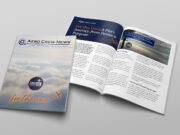
Organizations like Air Care Alliance have also played a vital role in supporting nonprofits like ours, helping connect aviation resources to missions that make a difference. Their support has helped validate that this kind of mission belongs in aviation, that using airplanes to serve others is not just possible, but essential. This isn’t just one organization doing the work. It’s a community. It’s public-benefit flying. And it’s working!

What Pilots Need to Know
As pilots, we are in a unique position. We see people in transition, at airports, in FBOs, on ramps, in moments where something might not feel right. It’s not always obvious. But sometimes it looks like:
• A passenger who avoids eye contact
• Someone who doesn’t have control of their own forms of identification
• A person who lets someone else speak for them
• Travel plans that don’t quite make sense
• A visible imbalance of control, where one person is clearly directing every aspect of the interaction
• Signs of anxiety, fear, or reluctance that seem disproportionate to the situation
No single sign tells the whole story. But patterns matter. And if something feels off, trust that instinct and follow proper reporting protocols. Awareness matters. Education matters. And as pilots, we have an opportunity, and a responsibility, to pay attention.
If you’re a pilot reading this, I would simply say this, there is a place for you in this mission. Whether it’s flying, supporting, educating, or advocating, your skills can make a difference in ways you may have never imagined. Because sometimes the most important flight you’ll ever make isn’t the longest, the fastest, or the most complex, it’s the one where everything changes for the person sitting beside you.
One Flight at a Time

Early on, I struggled with the scale of the problem. Human trafficking is massive. It’s overwhelming. And I remember thinking, are we really making a difference by helping just one person at a time? You look at the numbers. You hear the stories. And it feels like what you’re doing is just a drop in the bucket.
I prayed about that. And what came to me was simple, but powerful. The image of the shepherd leaving ninety-nine sheep to go after one is when it clicked. This work was never meant to be about solving everything all at once. It’s about showing up, for one person, in one moment, when everything is on the line. Because for that one person, it’s everything.
I’ve seen it. I’ve seen the moment someone realizes they’re safe. I’ve seen the weight lift. I’ve seen the shift, from fear to hope, right there in the seat next to me. That’s not small. That’s real.
Aviation has the power to change lives. Sometimes, it’s the life of a nine-year-old girl discovering her dream. And sometimes, it’s the life of a survivor finding freedom above the clouds. When you start to see it that way, you realize something else, this is how change happens, one flight at a time, one person at a time. That’s why our motto at Freedom Aviation Network is For The One. That’s why we fly—for the one.
Aviators and Advocates
Freedom Aviation Network began with a clear need: survivors of human trafficking often face increased danger in the first hours after leaving their situation. In those moments, safe and efficient transportation can mean the difference between freedom and being pulled back into the shadows.
In 2020, a small group of volunteer pilots stepped in to help, offering their time, skills, and aircraft to carry survivors to safety. What started as a few missions soon grew into something much larger. Survivors didn’t just need a ride—they needed a reliable network, ready to engage, to ensure that they could reach safety and begin the journey of recovery. By 2022, Freedom Aviation Network was formally established as a nonprofit, bringing together pilots, aircraft owners, and advocates across the country.

At the heart of FAN is the principle “For the One.” In the early days, it was easy to feel overwhelmed: so many still needed help, and each mission required significant time and resources. But through prayer, a vision of Jesus as the shepherd leaving the flock to go after the one, brought clarity. Every life is worth every mile, every effort, every resource. That is why each mission, no matter how small it may seem, carries immeasurable value.
Today, FAN has flown hundreds of missions across the United States, partnering with agencies, shelters, and communities to make freedom accessible. Each flight represents more than transportation, it is a declaration that survivors are not alone, and that hope is possible.
To learn more about Freedom Aviation Network, visit our website: freedomaviationnetwork.org