

































As we approach the tenth year of TikTok’s existence, you’ve likely had non-aviation friends or family send you videos showing crazy or unbelievable aviation content. I have as well, and I’ve let people know when whatever they’re sending me doesn’t seem real. I’ve left it at that for years — until recently. I have realized there’s a much deeper issue with “fake content” than I expected.
On October 3, 2025, my friend who goes by PropHatCat on social media posted a fantastic short video. PropHatCat is an air traffic controller who helps answer pilot questions and dispel air traffic control myths. His video presented his thoughts on why AI-faked aviation content needs to stop. (His video is linked at the end of this article.) The video he featured with his video critique purported to show ATC denying an American Airlines flight permission to land despite an emergency on board. Listeners heard fake audio of a captain arguing with ATC as he was denied landing due to the presence of Air Force One at the airport. PropHatCat’s argument against this click-bait content was clear: it makes the general public think pilots and ATC hate each other and can’t work together. Of course, he also argued against the use of AI to create fake content made just to generate views.
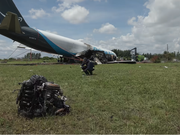
About one month later, the accident involving UPS 2976 in Louisville occurred, tragically killing three crewmembers and 12 people on the ground. This seemed totally unconnected to AI and fake content until the NTSB conducted an investigative hearing on May 19-20, 2026. During the hearing, the NTSB publicly released the contents of their investigation, which is completely normal as a part of any accident investigation. This docket included spectrograms of ambient noise captured on the cockpit voice recorder (CVR) during the accident sequence.
Almost immediately, people downloaded the spectrograms and used readily available AI tools to reconstruct the CVR audio of the accident. For motives I won’t speculate on, some posted their AI-reconstructed UPS 2976 CVR audio files online. Stop and consider, for a moment, how you would feel if you knew someone killed in the accident. How would you feel if one of your family members was on the AI-generated CVR reconstruction, and you “heard” their reconstructed last words?




The NTSB reacted swiftly by removing the public dockets for the UPS 2976 accident and temporarily, all other accident dockets. Most were eventually restored, but as of the end of May 2026, 41 records remained publicly removed because of the NTSB’s concern for additional AI-driven CVR reconstruction potential. The NTSB’s site temporarily included the following statement:
“The NTSB is aware that advances in image recognition and computational methods have enabled individuals to reconstruct approximations of cockpit voice recorder audio from sound spectrum imagery released as part of NTSB investigations, including the ongoing investigation of the crash last year of UPS flight 2976 in Louisville, Kentucky. The NTSB does not release cockpit audio recordings. Federal law prohibits such public release due to the highly sensitive nature of verbal communications inside the cockpit. The NTSB takes these privacy restrictions seriously.”
What implications are associated with this temporary docket removal and partial restoration? Why should I care as an aviation professional? Here are a few talking points I propose to spark ongoing conversations.
- Aviation becomes safer because we can review accident investigations and learn from them. If the NTSB can’t release as much information due to misguided use of AI, those who need to learn from accident investigations won’t be able to do so as freely as in the past.
- AI itself is a tool. When humans abuse tools for nefarious purposes, people suffer. What is it about our current social climate that makes us desire to release or consume the most extreme content possible? How can we promote safeguards to prevent AI from being used for unethical purposes?
- Aviation is a high-profile business. We should all strive to promote what is good about aviation while eliminating misunderstandings. Resist the temptation to believe everything you see or hear online. Conduct some fact checking before sending it on, reposting it, or even liking the content.
Will our efforts to defend aviation safety in the wake of unethical AI use prove successful? What else can we do as aviation professionals? Reach out in the comments or contact me on my website: www.theaviationvault.com.
I made this short to summarize: https://youtube.com/shorts/c69QoGS0TZk?feature=share or scan this QR code to watch or share:

This article is based in part on another article from NPR published in May 2026 shortly after the NTSB removed docket access to the public. Read its original story here: https://www.npr.org/2026/05/30/nx-s1-5835242/ntsb-cockpit-audio-cvr-reconstruction
PropHatCat’s video is on TikTok: https://www.tiktok.com/@prophatcat/video/7557184332264115487 and on Instagram: https://www.instagram.com/reel/DW4naIOCREU