
























































Our phones are remarkable tools. They connect us with the people we love when on a trip, help us stay organized and manage our daily tasks, and provide instant access to an abundance of knowledge. However, for many of us, our phone use needs some boundaries. Excessive screen time triggers dopamine highs and crashes, which are linked to worsened memory, “brain rot,” anxiety, and heightened stress levels. Does that mean we should disconnect completely and go entirely offline? Maybe not. Studies show that even partial digital detoxes can significantly lower stress and increase attention spans. This article offers tools to reclaim your attention and reshape your relationship with your screen.
Think of your phone as a dog. A dog brings joy, companionship, and energy into your life. It motivates you to get outside and helps establish routines. However, if you never set boundaries, your dog will happily take over your entire day. The dog will demand another walk, another treat, and ask for more attention.
Your device operates the same way. It is always sitting there, ready for attention, offering an endless stream of messages, news, social media, and algorithmic rewards. If you allow it, it will fill every moment of your day. One notification becomes ten minutes of scrolling; one quick social media check becomes an hour of fractured attention. The problem is not that we have a phone. The problem is that many of us have forgotten how to maintain a healthy, intentional relationship with it.
Chronic Stress



We all feel it: the social expectation that you need to be instantly available to everyone, at all hours of the day, the anxiety of having your battery almost empty at the end of a long day, and the compulsive habit of opening the same app you closed thirty seconds ago.
As a pilot during layovers, your phone is often your only link to home. But dealing with family stress or constantly checking for extra work trips — especially during rest time — keeps your body stuck in “work mode.” In addition, the habit of checking your phone does not automatically stop when you walk into the flight deck. The impulse to check your phone becomes an automatic reflex, and now you might be spending mental energy actively resisting that “itch.” That constant internal battle creates unnecessary stress when focus and safety matter most.
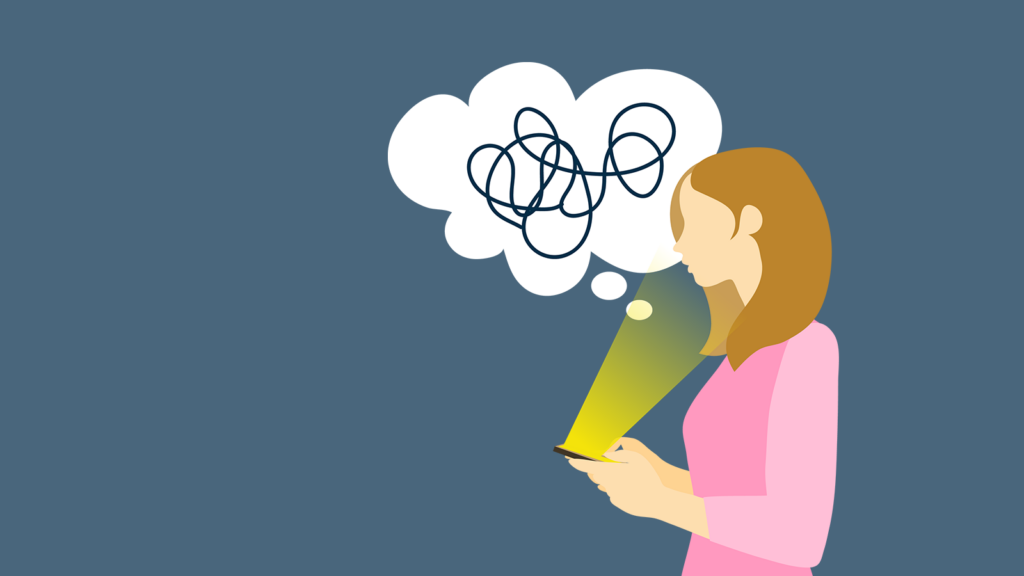
As useful as phones are, they have introduced chronic stress into our daily lives. Research increasingly shows a clear connection between smartphone use and heightened stress levels. Instead of relaxing, we attempt to numb ourselves by hours of mindless, hyper-stimulating, short-term content that harms our dopamine receptors (better known as “brain-rot”). We think we are unwinding, but we are actually leaving our brains overstimulated and unable to recharge.
Digital Detox?
The question is whether complete restriction is the most sustainable way to reduce phone use. The term “digital detox” makes it seem as if they are harmful substances we need to avoid as much as possible. Yet our phones are also incredibly useful tools in our society that make many parts of life easier. Trying to completely escape the digital world is not only exhausting, but it is also unrealistic.
Instead, we can look through a different lens: focusing on a more balanced relationship with our phones by creating healthier boundaries and using technology more intentionally.
Your Phone as a Tool
Back to the dog analogy. A smart dog owner does not let the dog dictate their schedule. The owner decides when it is time to walk, when it is time to play, and when it is time for rest. The same psychological principle applies to your technology: you decide when it is time to “walk the dog.”
Instead of reaching for your device every time it asks for attention, create intentional, structured blocks for phone use:
- Batch your communications: Check and reply to messages at specific, designated intervals vs. treating every text like an emergency.
- Schedule your dopamine: Set aside distinct windows for social media or news consumption.
- Audit your utility: Prioritize using your phone for active, meaningful tasks rather than passive, mindless consumption.
- Establish screen-free spaces: Put your phone entirely out of sight during high-value moments such as sleep, meals, or face-to-face conversations with the people right in front of you.
Without these structural boundaries, your nervous system does not receive a sign that it is safe to down-regulate. Like an anxious dog following you from room to room, a phone without setting any boundaries follows you everywhere: into your bedroom, your meals, your relationships, and your thoughts.
“Digital Nutrition”
The dog analogy helps us understand how we interact with our screens; the concept of digital nutrition helps us evaluate what we do when we are on them. Psychologist Jocelyn Brewer originally coined the term “digital nutrition” to describe a healthier, more conscious approach to technology.
A healthy relationship with food is about choosing what nourishes you and limiting what leaves you feeling depleted. Think of your phone use as sugar: most people do not need to eliminate sugar to be healthy but eating chocolate all day will make you feel sick. It helps to distinguish between digital activities that serve as nourishing meals and those that act as empty calories:
| Nutritious Digital Consumption | Digital Junk Food |
| Calling a friend to catch up | Endless, aimless scrolling through algorithmic feeds |
| Learning a new skill or listening to an educational podcast | Reactively checking notifications out of boredom or discomfort |
| Using utility tools (maps, budgeting, scheduling) | Engaging in online comparisons that trigger inadequacy |
| Intentionally staying connected with family and friends | Consuming sensationalized content without purpose |
Research from Georgetown University (2025) suggests that we do not need extreme restriction to see the benefits. Their study found that even partial digital detoxes (reducing screen time or limiting access to certain apps or the internet) significantly improved sleep, reduced anxiety, and restored our cognitive ability to sustain attention. This means that we do not need to eliminate our phones entirely, but that we need a balanced digital diet.
Three Principles of Behavioral Alignment
Re-establishing authority over your device can be built around three mindfulness-based ideas.
1. Be Mindful
Pay attention to your habits. Notice the exact internal state you are in when you reach for your phone on autopilot. Are you checking it because you need information, or because you are feeling bored, anxious, uncomfortable, or lonely? Use built-in screen-time tools to gather objective data on where you spend your attention.
No need to download anything new; your device already has built-in usage tools. If you use an iPhone, check Screen Time (Settings > Screen Time) to see your notification activity and app-usage breakdown, or to set App Limits and Downtime.
On Android, navigate to Digital Wellbeing (Settings > Digital Wellbeing) to review, set App Timers, and activate Bedtime Mode.
2. Be Meaningful
Before you open your phone, run through a quick, three-second mental checklist:
- Why am I picking this up right now?
- What specific task do I want to accomplish?
- When will I put it back down?
Consciously choosing to scroll for fifteen minutes to relax is an autonomous choice; losing an hour because you opened an app without purpose is a lost opportunity for cognitive rest.
3. Balance
Create balance with your phone.
- Turn off all non-human notifications (likes, news alerts, game updates)
- Move distracting, high-dopamine apps (TikTok, Instagram Reels, YouTube Shorts) off your home screen into folders or access them only via a web browser to create a boundary.
- Keep your phone physically out of reach during meals and social gatherings.
- Set a boundary around work communications outside of professional hours.
- Pro tip for pilots: Continuous checking of schedule bidding, open trips, or company communication prevents your brain from shifting out of work mode.
- For example, protect your free time and rest by setting cut-off times for bidding. If you serve on-call status, consider a separate work phone or utilizing dedicated focus modes so that operational alerts don’t take over your personal time.
Protect Mornings and Evenings
The beginning and end of your day are important periods that heavily influence your baseline stress levels. Instead of flooding your brain with cortisol-inducing headlines and notifications the second you open your eyes, give your nervous system a chance to wake up naturally. Allow yourself to stretch, drink coffee, walk, journal, or be in a quiet room for the first 30 minutes of the day.
At night, your mind requires a deliberate transition into deep, restorative sleep. Keeping your device out of the bedroom creates a clean, physical separation between the daily demands and time for recovery. Consider bringing back a standalone alarm clock for your nightstand.
Exercise 1: The 24-Hour Audit
To help you transition from theory to practice, try this simple, low-pressure 24-Hour Attention Audit. No need to change anything about your phone use yet; the goal here is purely curiosity and observation, not judgment.
Step 1: 3-Second Pause
For the next 24 hours, every single time you reach for your phone, pause with your hand on the screen for three seconds before unlocking it. Ask yourself one question:
“What feeling or need prompted this reach?”
- Is it functional? (e.g., I need to check the weather, respond to a friend, or find directions.)
- Is it emotional? (e.g., I am feeling bored, anxious about a task, lonely, or mentally fatigued.)
On a sticky note or in a notebook, jot down a quick tally of how many times your reach was functional versus emotional.
Step 2: Classify Your Digital Diet
At the end of the day, open your phone’s built-in screen time tracker. Look at your top three most-used apps and classify them using the “Digital Nutrition” framework:
- Nourishing Apps: Did these leave you feeling connected, informed, or genuinely rested? (e.g., a meditation app, a phone call with a loved one, a language learning tool)
- Junk Food Apps: Did these leave you feeling slightly drained, anxious, or numb? (e.g., endless scrolling on social media, checking the news)
Step 3: Choose One “Micro-Boundary”
Based on what you noticed, pick just one tiny boundary to experiment with for the next three days. Do not try to overhaul your entire life at once. For example:
- The Bedroom Ban: Charge your phone across the room or in the hallway overnight.
- The First 30: Don’t check notifications or emails for the first 30 minutes after waking up.
- The Single-Screen Rule: When watching a movie or eating a meal, your phone must be out of reach.
Final Thoughts
Shifting behavioral habits takes time, patience, and self-compassion. There will be days when you spend more time online than you wanted, and days where the screen wins your attention. That is simply part of being human in a world engineered for distraction.
The goal is to step back into the role of the intentional decision-maker. Use your phone with purpose but protect the moments where you need to be fully present. There is no need to abandon technology, you just need to remember who is in charge.
Getting out of the digital loop and therefore managing chronic stress is a process you do not have to go through alone. If you are finding it difficult to set boundaries or feel overwhelmed, reach out to Emerald Mental Health viawww.emeraldmentalhealth.com or [email protected] to learn more about professional counseling and coaching support.
Resources
Brewer, J. (n.d.). The digital nutrition philosophy: A guilt-free approach to screen time. https://jocelynbrewer.com/the-philosophy/
Georgetown University. (2025, November 10). Digital detoxes work. Here’s what reduced screen time can do for you.https://www.georgetown.edu/news/digital-detox-reduce-screen-time-benefits/