













































Welcome back to Grey Matter, and an aerodynamic continuation (kind of like the phenomenon of this article) from last month when we discussed the myth and reality of equal transit theory, which if it can’t be eliminated from the FAA canon, should probably be referred to as the asymmetrical flow hypothesis…
Anyway, this month, we’re doing the same thing for in ground effect, that “cushion of air” which would reveal itself as no cushion at all if you opened the door to the plane and stepped out. Let’s get on with it.
The Cushion of Air
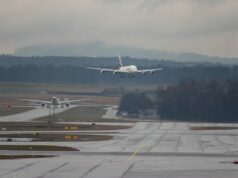
There comes a moment in every pilot’s life when the airplane seemingly refuses to land. Truth be told, there are many moments if you stick with flying long enough. You’ve reduced power. You’ve flared. You’re holding it off — it’ll be a greaser if it’ll just touch down. And yet, the aircraft continues to skim down the runway like it has suddenly discovered anti-gravity. Congratulations. You’ve now met in ground effect (IGE), the aerodynamic equivalent of a smug grin.




Pilots and even CFIs often identify and describe it as a “cushion of air.” This is of course technically incorrect, but emotionally accurate, since it feels like you’re trying to force two opposite ends of a magnet together as a result of the airplane having just become 15% more aerodynamic out of spite.
In reality, what’s happening is far less mystical and more physical. When you fly within roughly one wingspan of the ground:
- Wingtip vortices weaken
- Downwash decreases
- Induced drag is reduced
- Lift increases for the same airspeed
In plain English, the airplane becomes more efficient at flying right when you’re trying to make it stop flying. Yet it doesn’t just happen during landing, but during takeoff as well, which pilots tend to talk and think about far less than IGE encounters during landing.
On Takeoff: The False Confidence Phase
On departure, ground effect can be seductively helpful. The airplane lifts off early. It feels light. Powerful. Capable. You think, “Look at that climb performance.” The airplane thinks, “We are not climbing. We’re hovering dramatically.”
What to do? Pitch up – absolutely not. You’ll stall despite all that power and hit the ground, hard. Instead, remain in ground effect and continue to accelerate, because if you pitch up too soon, the cushion vanishes and gravity resumes its contractual obligations.
On Landing: The Endless Float Phase
Come in faster than necessary (arriving over the threshold with excess energy) and you’ll discover the true personality of IGE.
You flare.
You wait.
You float.
You pass midfield.
Passengers begin evaluating alternate transportation.
The airplane is perfectly content to remain six inches above the runway indefinitely, having discovered peak aerodynamic efficiency at precisely the wrong time. Moreover, it doesn’t matter if you’re flying a C-172 or a B767, running out of runway will eventually occur unless you do something, soon.
Options (remind me of the Choose Your Own Adventure books from childhood):
- Verify idle thrust, ever so slightly increase the flare (angle of attack), and/or use a small amount of flight spoilers if available – or use a lot, and you will definitely land. (Make sure you brief this option with your fellow crew if you are in a crewed environment).
- Instead of increasing the angle of attack, consider gently relaxing backpressure to reduce the pitch of the aircraft and allow the airplane to settle onto the runway; you will be faster than ideal, but this allows you to start using the brakes – just be cautious to avoid wheelbarrowing or landing nose wheel first, and this technique often does the trick.
- Go-around with max thrust, but do not change configuration until you have a verified positive rate of climb, because dumping flaps like in a standard go-around or missed approach will result in a catastrophic loss of lift; also, do not pull for max pitch because the same thing will happen if you over rotate – or at the very least, you’ll drag the tail down the runway.
Why it is Not Actually a Cushion
There is no pillow of compressed air. The ground isn’t “pushing” or “holding” you up. What’s really going on is that the ground interferes with the wing’s vortex arrangement, decreasing induced drag. With less drag, the aircraft doesn’t decelerate as quickly. With less downwash, effective angle of attack increases slightly. The result is sustained lift.
The practical reality is that ground effect is strongest over smooth surfaces (e.g., a runway), and within about one wingspan of the surface, but especially within a half wingspan. (Do you know your aircraft’s wingspan?) It helps you accelerate on takeoff AND it helps you float on landing. HOWEVER, it does not improve your climb performance.
Final Thoughts
In ground effect is not magic. It is not a cushion. It is not your friend. It is a temporary aerodynamic loophole that exists solely to test your airspeed discipline and runway management.
Anticipate it, actively manage it, treat it with respect, and it will make you look smooth.
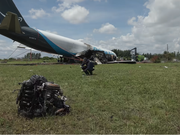
Ignore it, and you will give your passengers a full tour of the runway and perhaps introduce them to the local crash-fire-rescue team.