






















































Pilots hide things from their AME. It isn’t because we’re dishonest. It’s because for decades the system taught us that being honest could cost us a career.
That’s no longer just hangar-talk opinion. In late September, the U.S. Senate unanimously passed two bipartisan bills to modernize how the FAA handles mental health and medications for pilots and air traffic controllers. The bills now go to the House. Whatever happens there, Washington is saying out loud what crew rooms have known for years: the culture of silence around pilot health is a safety problem.
Here’s what the bills do, and why the same silence is quietly wrecking our metabolic health.
Part 1: What the Senate Actually Passed
Sen. Tammy Duckworth (D-Ill.) led both bills, with bipartisan support that includes Sen. John Hoeven (R-N.D.).




1. The John A. Hauser Mental Health in Aviation Act (S. 3257). It’s named for a University of North Dakota aviation student who died in 2021. The bill would require the FAA to:
- Update its Part 67 medical certification rules within 18 months of the bill becoming law.
- Review the Mental Health Special Issuance process on a recurring basis. That includes checking whether more medications and treatments can be accepted, and whether specially trained AMEs can issue more certificates themselves instead of sending every case to Oklahoma City.
- Spend up to $15 million a year through fiscal 2028 to recruit and train more AMEs, including psychiatrists, and to cut the special issuance backlog.
- Within two years, adopt the recommendations of the FAA’s own 2024 Mental Health and Aviation Medical Clearances Aviation Rulemaking Committee, or explain to Congress why it didn’t.
- Run a public campaign to reduce the stigma around receiving care.
2. The Aviation Medication Transparency Act (S. 3258). Within one year, the FAA would have to publish plain-language guidance on prescription and over-the-counter medications through MedXPress. It would cover “Do Not Issue” and “Do Not Fly” designations and any required wait periods before flying. In practice, you’d no longer have to guess whether the allergy pill in your flight bag is a problem.
Why now? A 2023 Department of Transportation Inspector General report found that pilots starting an antidepressant can wait more than a year for FAA authorization. According to reporting on the bills, about 20% of pilots and controllers are initially disqualified after reporting a mental health issue. Controllers can be pulled from work for three months just for changing an antidepressant dose.
ALPA President Capt. Jason Ambrosi summed it up: “Seeking mental health care should be viewed not as a career risk but as a professional responsibility.”
What it doesn’t do yet: This isn’t law. The House passed its own version in September 2025, and the two versions must be reconciled before anything reaches the President. Nothing about your next medical changes this month.
What has changed is the conversation. Congress is officially acknowledging that when pilots are afraid to get care, they stop getting care. That fear isn’t limited to mental health.
Part 2: The Same Silence Is Costing Us Our Metabolic Health
A 2022 study in the Journal of Occupational and Environmental Medicine surveyed 3,765 pilots:
- 56.1% had avoided healthcare out of fear of losing their medical certificate.
- 45.7% had looked for informal care instead of seeing a doctor.
- 26.8% had withheld or misrepresented information on a health questionnaire.
Read those numbers again. More than half of us are avoiding the doctor.
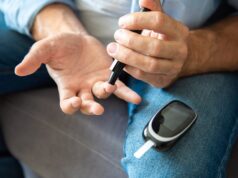
Mental health gets the headlines, but a pilot who won’t see a therapist usually isn’t getting bloodwork either. And metabolic problems are the quiet kind. We’re great at handling emergencies in the cockpit. We’re terrible at noticing the slow ones inside our own bodies:
- Blood pressure creeping up a few points every year.
- A1C drifting from “fine” to “watch it.”
- Sleep stuck at five hours on a four-day trip.
- Brain fog that we start calling normal.
Here’s the catch: these are exactly the issues that eventually will show up on your medical. The FAA’s blood pressure ceiling is 155/95. Diabetes that needs medication means special issuance. A high BMI triggers screening for sleep apnea. The difference between catching these while they’re still trending and catching them once they’re diagnosed is huge. Early usually means lifestyle changes. Late usually means medication, paperwork and a special issuance.
8 signs of insulin resistance that crews often dismiss:
- Stubborn belly fat
- Falling asleep after meals
- The 2-3 p.m. energy crash
- Sugar cravings in hotel rooms
- Brain fog
- High triglycerides
- Waking up exhausted
- A waistband that gets tighter every year
None of these diagnose anything on its own. They’re reasons to get checked, not reasons to panic.
This isn’t a discipline problem. I’ve sat in the same seat you have. The eat-less-move-more crowd has never tried it through a time-zone change, an airport food court at 2200, a wrecked circadian rhythm and eight hours of sitting. You’re not lazy. Your body is working against conditions that were never designed for it. That’s why generic meal plans fail airline crews.
Part 3: What to Do Before Your Next Medical
Congress fixing the system is years away. Here’s what you can do now:
- Know your numbers. Ask your primary care provider for fasting glucose, fasting insulin, A1C and a lipid panel. The triglyceride-to-HDL ratio is an underrated early warning sign. Buy a home blood pressure cuff and check a few mornings a week.
- Check your medications and supplements today. The FAA already publishes “Do Not Issue” and “Do Not Fly” lists in the AME Guide. Don’t wait for the new law to find out.
- Talk to your AME before there’s a problem. Walk in with data and a plan, not a surprise. AMEs deal with trending numbers all the time. What gets pilots into trouble is what goes unaddressed or unreported.
- Use the support that already exists. If you’re struggling mentally, union peer support programs such as ALPA Pilot Peer Support and the HIMS program exist so you have somewhere confidential to start. Using them is the professional move.
- Always tell the truth on MedXPress. Getting information early is about fixing problems while they’re small, never about hiding them.
The Senate did its part last month. Our part is to stop waiting until a problem is obvious. Protect your medical by protecting your health. The weight loss is usually the byproduct, not the starting point.
This column is educational only. It does not replace medical or mental health treatment, and pilots must comply with all FAA medical reporting requirements.