





















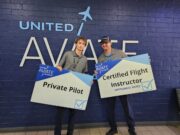























The commercial aviation industry has been through a whirlwind over the last six years. Since the COVID-19 pandemic hit the United States full-force in 2020, the airline industry has been through a feast-or-famine cycle that leaves many of us feeling a certain level of whiplash. Looking back on the experience, notably from the perspective of a professional pilot still very much at the start of his career, it is critical to put one’s career in perspective and avoid a keeping-up-with-the-Joneses cycle that is often counterproductive.
I took my discovery flight in September 2019 and started full-time flight training in July 2020. At the time, optimistic estimates put the start of the travel rebound sometime between 2023 and 2025, and there were questions of whether travel would ever recover to pre-pandemic levels.
Those guesses were very wrong, and the rebound between mid-2021 and early 2023 kicked off a hiring spree that the industry has never seen before and may never see again. A breathtaking wave of new pilots was created to fill the gap, and despite airline hiring having somewhat recovered to pre-pandemic levels, the 2025 U.S. airman statistics show that we continue to create a record number of private and commercial pilots, as well as flight instructors.
This has created a market wherein, at every level, pilots are fighting harder than they had expected to get jobs. Flight schools, regional airlines, and major airlines have somewhat tapered their hiring (despite the anticipation of newly certified 737 MAX planes and an upcoming wave of retirements), and I have heard frustration from pilots at each level who expected to be moving to the next stage of their careers sooner.





I appreciate where these pilots are coming from, and I must admit that to some extent, I have fallen into the trap myself. Hearing about bygone hiring eras as recounted by pilots senior to me and seeing others post their accomplishments online can make it easy to fall into frustration, irrespective of what my situation is really like.
Lately, I have made it a goal to take a step back and appreciate the place I have come to in my own career. No matter where you find yourself, or what your career goals are, I believe this to be an important practice that must not be overlooked. No matter how exciting or grim the situation may feel, gratitude is a critical part of any aviation career — any success, for that matter.
I believe that pilots who are new to the industry see a system that allows for lightning-fast progression to the top of the aviation pyramid. My impression is that many people who feel stuck in their positions (whether working as a flight instructor beyond 1500 hours or flying for a regional or LCC) are not as far behind in that progression as they may feel.
Many of our predecessors experienced countless furloughs, mergers, recessions and accidents that slowed growth and career progression, yet they have still been able to lead fruitful, successful careers. No matter how often I feel behind or worry about not “making it” early enough, I must remember that I am still fortunate in an enviable position — even if I am stagnant for the rest of my career.
There are a number of ways I remind myself of this on a day-to-day basis. I strive to take a moment, at least once a week if not more, to stop and look around to appreciate the present moment. Relatively easily, I recall moments for which I can be grateful. This does wonders for keeping up my spirits.
I have also limited my social media activity, a practice that helps keep me from comparing and stressing over where I am in relation to others. This allows me to focus specifically on my own goals, career, and situation. Worrying about my place relative to others’ accomplishments diminishes how my strengths, weaknesses, and opportunities differ from others; these differences must not be taken as value issues, and I must remind myself that it does not make my achievements any less significant.
I encourage other pilots working their way through the ranks, no matter where they are in their careers, to take part in critical mindfulness practices. Different methods work for different people, but I find that taking time to appreciate the journey and each step along the way makes my career much more meaningful. I have enjoyed my flying time more when I have stopped to appreciate my current situation; and as I have look back, I realize in retrospect, that I am much fonder of each step than I felt in the moment.
Do not agonize over which career path looks best nor worry about what milestone needs to occur when. If you are making progress towards your ultimate goal, no matter how long it takes or where anybody else is in their own journey, the details of a fantastic career will take care of themselves. In the meantime, get into the sky and enjoy going flying.