



















































Last week, hundreds of ALPA pilots took part in over 250 high-level meetings on Capitol Hill, engaging directly with members of Congress and their staff. These discussions focused on three critical issues impacting aviation safety and operations, ensuring that pilots’ firsthand perspectives remain central to ongoing aviation safety legislative efforts.
With a well-known adage in Washington stating, “If you’re not at the table, you’re on the menu” these meetings reinforce the importance of active pilot involvement in aviation safety policy-making. ALPA’s presence helps prevent safety regulations from being shaped without pilot input, safeguarding the expertise and interests of those who operate the nation’s airliners daily.
Reduced Crew Operations: A Clear Safety Risk
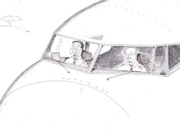
Pilots emphasized that maintaining two qualified crew members on the flight deck is a proven safety necessity. A key concern highlighted was the growing push for extended minimum crew operations (eMCO), a proposal actively pursued by Airbus and under consideration by the European Union Aviation Safety Agency (EASA) to allow a single pilot on duty during cruise phases.





Meeting participants were briefed on real-world risks such as pilot incapacitation and emergencies. Data shows 39 instances of pilot incapacitation on U.S. commercial flights in the past six years, with the presence of a second pilot proving critical in each case. This issue was framed as an urgent, bipartisan safety priority, not a hypothetical future risk.
ALPA pilots urged lawmakers to sign a bipartisan letter to U.S. Department of Transportation Secretary Duffy, calling for formal opposition to eMCO at the International Civil Aviation Organization (ICAO) and sending a strong message to international regulators that reduced crew operations have no place in commercial aviation.
ATC Modernization: Addressing a System in Crisis
The delegation detailed the urgent need to modernize the nation’s air traffic control (ATC) system, citing examples of near-misses, in-flight inefficiencies, and degraded situational awareness stemming from outdated facilities, antiquated telecom infrastructure, and chronic understaffing.
According to representatives from the National Air Traffic Controllers Association (NATCA), the U.S. currently faces a shortage of over 5,000 certified professional controllers. With a minimum three-year training pipeline, staffing recovery is slow, and controllers frequently work 60-hour weeks across six days, raising concerns about fatigue in this high-stakes environment.
While infrastructure funding exists, approximately 90% is devoted to maintaining legacy systems, often forcing incompatible technologies to function together. The delegation stressed that piecemeal upgrades at select airports are insufficient; comprehensive systemwide modernization is essential.
Key priorities include transitioning from copper to fiber communications, expanding satellite-based tracking, fully implementing the Surface Awareness Initiative (SAI) to reduce runway incursions, and reforming the confusing and cluttered Notice to Air Missions (NOTAM) system.
The ask was clear: sustained, adequate funding and legislative backing to bring the entire ATC system into the 21st century. Many congressional offices expressed strong interest in the staffing crisis and the need for long-term investment, recognizing this as a bipartisan issue that touches public safety and infrastructure alike.
Mental Health in Aviation Act: Modernizing Pilot Care
Mental health policy in aviation was another issue that resonated deeply with lawmakers. The current FAA medical review process for mental health concerns is often lengthy, opaque, and discouraging. Pilots can wait six to eighteen months for decisions after disclosing treatment or being deemed fit for duty by their physician, with minimal communication or clear timelines.
The delegation underscored that pilots undergo rigorous medical evaluations and are not seeking lowered standards, but rather a process that is transparent, fair, and aligned with current medical knowledge.
The bipartisan Mental Health in Aviation Act (HR 2591), introduced by Representatives Sean Casten (D-IL) and Pete Stauber (R-MN), was presented as a meaningful solution. The bill mandates FAA implementation of recommendations from its own Mental Health Rulemaking Committee within two years, requires annual FAA assessments of mental health protocols, authorizes hiring additional medical reviewers and Aviation Medical Examiners, and prioritizes reducing unnecessary delays without compromising safety.
Emphasizing that timely access to mental health care is critical for aviation safety, ALPA urged lawmakers to cosponsor the bill and support a culture where seeking help is seen as responsible rather than career-threatening.As the aviation landscape evolves, the voices of those who fly remain essential to shaping policies that keep passengers and crews safe. This recent wave of engagement on Capitol Hill underscores ALPA pilots’ unwavering dedication to proactive, bipartisan advocacy, ensuring safety remains the cornerstone of aviation’s future. Pilots interested in supporting this advocacy are encouraged to donate to their pilot union’s PAC, strengthening the collective voice that influences aviation safety policy.