
























































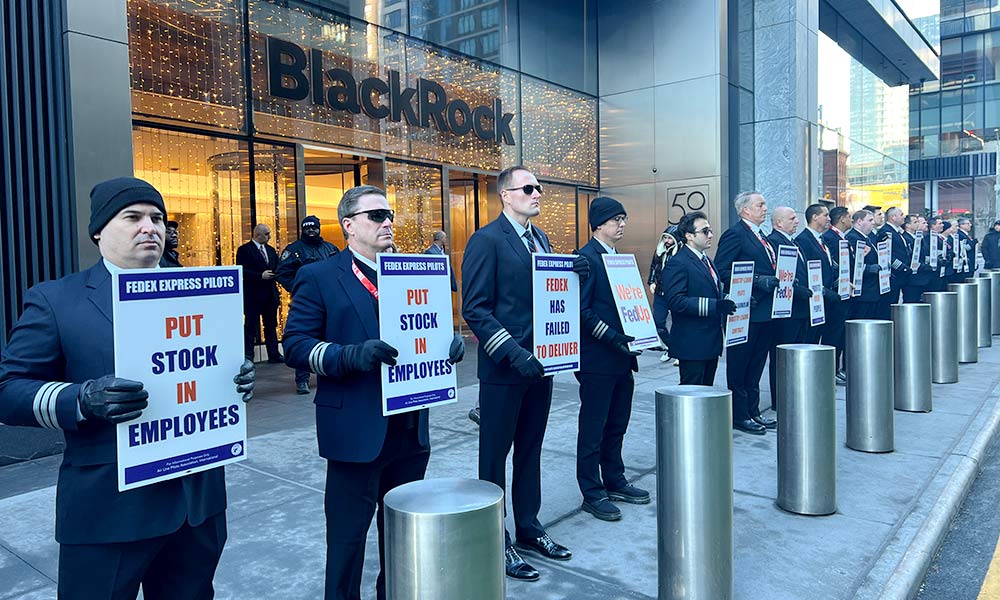
New York City, N.Y.— Pilots demonstrated their frustration with “peak” performance this shipping season in an informational picket ahead of FedEx’s second-quarter fiscal year 2026 earnings report on Thursday, December 18, 2025. The pilot group, represented by the Air Line Pilots Association, International (ALPA), says corporate cost-cutting measures negatively impacted operational integrity in what had long been a stable air operations network. During the peak shipping season, that network struggled to deliver and, at times, broke down under sustained demand.
Amid peak operations, FedEx pilots have experienced increases in schedule revisions and extensions compared to historical norms, with some crews receiving multiple changes within hours of report time. Additionally, systemwide flight cancellations have continued to increase at key hub locations. These disruptions compound already strained operations during one of the most demanding shipping periods of the year.
According to Capt. Jose Nieves, FedEx ALPA MEC chair, “The Company took excessive risk by leaning operations, misaligning resources, and manipulating schedules during a corporate transformation program. Approaching peak shipping season and on the heels of the MD-11 aircraft grounding, the air network was not resilient enough to flex to customer demand. The result was degraded performance, increased delays, and mounting strain on systems and crews trying to stabilize the network on the fly.”
Pilots have experienced unprecedented instability. Poor operational planning and execution only compound what has been a tumultuous labor relationship with the FedEx Corporation over four and a half years of contract negotiations.




According to Nieves, “We’re at another critical inflection point. A contract alone will not resolve this operational crisis. Collaboration is the key to restoring reliability—starting with a contract that accurately represents the future of the operation, acknowledges industry standards, and provides the staffing, protections, and reliability necessary to stabilize the network under peak demand.”
While the Association and Company engaged in direct bargaining in recent months, the negotiation process has now moved under the National Mediation Board. As peak season pressures continue, restoring reliability requires management decisions that match the realities of the operation and the workforce that sustains it.