










































The Latvian airline airBaltic this April marks the 8th anniversary of its Pilot Academy, a programme that has been training commercial pilots in Latvia since 2018. The Academy currently has 174 active students from Latvia and other European countries, with training taking place across three Latvian cities – Riga, Liepāja, and Ventspils.
Since the establishment of the Pilot Academy in 2018, 164 graduates have joined the airline, with the majority now serving as First Officers and several taking on roles as theoretical training instructors. Recently, five of its graduates successfully completed their Captain upgrade, becoming the first Pilot Academy alumni to serve as Captains on Airbus A220-300 aircraft at airBaltic. Eight years after the first intake, the Academy’s graduates are now in the cockpit at every level from First Officer to Captain.
Pauls Cālītis, Chief Operations Officer of airBaltic: “The Baltic States is a small region, and for a long time, becoming a pilot meant leaving. You trained abroad, and often stayed abroad. The Pilot Academy changed that. Today we have over 160 pilots who trained here in Riga, and are now flying for the largest airline in the Baltics. It means that our region has the people, the knowledge and the infrastructure to run an aviation operation. Aviation is not just about flying passengers from A to B. It is a technical sector that requires years of education and significant investment. The pilots flying in 2030 are being trained today. For the Baltic States, having a training programme like this means people who want to become pilots can do so without leaving the region, and once qualified, they work and build their careers here.”
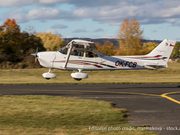
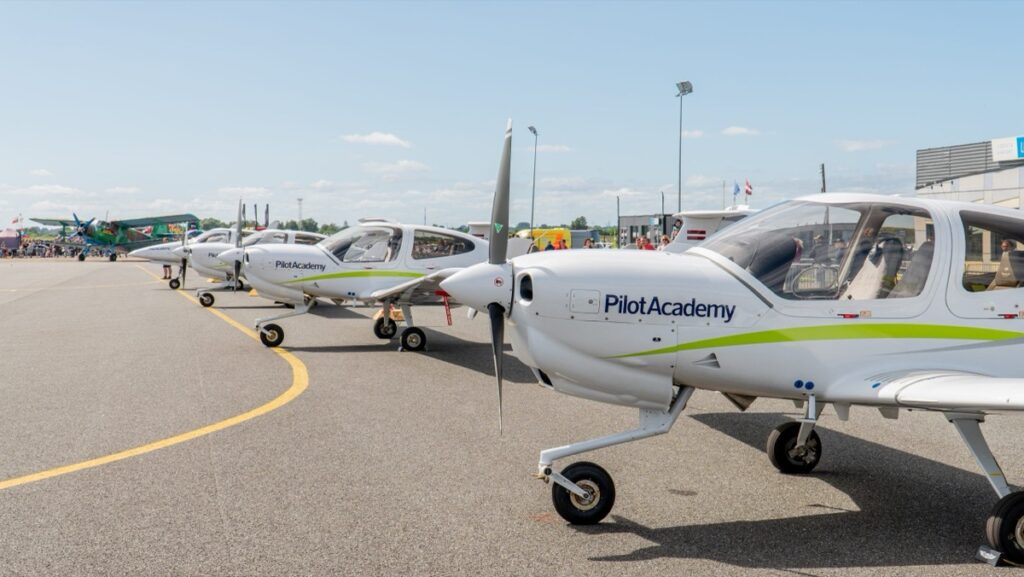
Theoretical training and simulator sessions at the airBaltic Pilot Academy are conducted at the airline’s Training Centre in Riga, Latvia. Practical flight training takes place in Liepāja and Ventspils, Latvia, using Diamond DA40 and DA42aircraft. More information about the Pilot Academy is available on the website: www.pilotacademy.com.






The development of the airBaltic Pilot Academy has played an important role also in strengthening airBaltic Training’soverall training ecosystem, contributing to its ability to achieve recognition as a Diamond Authorized Training Centre. As one of the few facilities of its kind in Northern Europe, this status reflects the maturity and high standards of the training environment supporting the Academy, ensuring that cadets benefit from manufacturer-approved procedures, modern training infrastructure, and a highly integrated airline training pathway.
An interview with one of the airBaltic Pilot Academy students, in which the cadet shares insights into the training experience and studies, is available here:
airBaltic operates scheduled services connecting the Baltic States to 80 destinations across Europe and beyond. A complete schedule of airBaltic flights and tickets are available on the company’s homepage at www.airbaltic.com.