

























































In early April, my podcast, “The Flight Department Show,” debuted. The show has been well received and has generated the conversation I hoped it would, and that is about the quiet crisis we have in business aviation—the crisis of leadership.
One of the stories I used in the opening episode of the podcast was about the most memorable commander/leader I have ever had, Lieutenant Colonel Alvia “Mud” Moore. I may have mentioned him in one of my previous articles. When I was flying A-10s in Europe during the Cold War, Colonel Moore was one of my squadron commanders in the 78th Tactical Fighter Squadron, based at RAF Bentwaters/Woodbridge.
In those days, we trained for the possibility that the U.S.S.R. and its Warsaw Pact allies would invade Western Europe, largely through the Fulda Gap on what was then the border between East Germany and West Germany. When we did NATO Tactical Evaluations, the Allied variant of an operational readiness inspection, we simulated the wartime environment by deploying to one of the forward operating locations in West Germany and then flying non-stop sorties over three days at the pace we’d have to endure in wartime. On the third day, the evaluation would typically end with the scenario of nuclear release, whereby the NATO allies, on the verge of being overrun, would employ nuclear weapons to stop the oncoming horde. It was a dire scenario that fortunately, we never had to execute.
But here’s the point that I want to emphasize. Even in the wake of such a dire scenario, every one of us in the 78th TFS would have followed Mud Moore into battle without a second thought. He was irascible and cursed like a sailor, but he had the gift of making you want to follow him into battle and into war.



I’ve never seen a leader like him in any business aviation organization where I’ve been employed. A leader that I would “go to war” with in a figurative sense. And apparently, I’m not alone. In an informal survey I conducted on LinkedIn a few months ago, I asked members of the business aviation industry if they had ever worked for a leader they would figuratively “go to war” for. The results were interesting but not surprising.
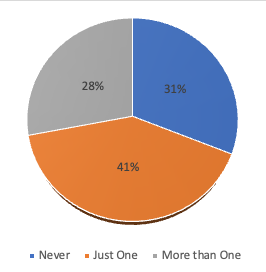
Nearly a third of the respondents indicated their experience had matched my own, they had never seen a leader for whom they would “go to war.” The majority of the respondents, 41%, had only seen one leader they felt that way about and about a quarter of the respondents said they had seen two or more leaders who met that criteria.
Granted this data is more anecdotal than empirical, but does that sound like we’re doing a good job growing leaders in our industry?
There are many reasons for this crisis in leadership but perhaps the most prominent one is that we don’t train people to lead. We assume that because someone can perform pilot-in-command duties in the cockpit, or manage a complex repair on the hangar floor, they are automatically qualified for leadership. We also assume that just because someone has seniority in the organization, they are qualified for leadership. Both of these assumptions are critically flawed for three reasons:
- Some people don’t want to be in leadership;
- Some people aren’t capable of leadership;
- Those who want to be in leadership and are capable of leadership, must be taught leadership.
Let’s start with the easy one first. There are those in business aviation, or in any profession, who simply don’t want the responsibilities and headaches that come with leadership. They just want to go to work, perform their tasks, and go home. We’ve all met people like this. There’s no shame for those who take this track. In fact, I would say this choice manifests a high degree of self-awareness.
Next, there are those who aren’t capable of leadership. I’m aware that this statement isn’t politically correct, for there are a host of authors, consultants, and human resources personnel who subscribe to a theory that for them is a mantra, i.e., anyone can be a leader. That might be a great slogan for selling books and services and perhaps inflating egos, but it is utter nonsense. There is a crucial foundational element that has to be embedded in the human personality for someone to lead effectively. I call it leadership DNA. If it’s there, we can build upon it. If it isn’t there, someone can receive all the leadership training we can provide and while it might make that someone an effective manager, it won’t teach them to lead. We’ve all known people like this too. Unfortunately, they can sometimes be in actual leadership positions. They are easy to identify because despite whatever training or experience they may have, they simply don’t perform well in a leadership role. I’m not talking about those who are new to leadership and misstep. I’m talking about those who have been in leadership roles for a while and still micromanage, don’t solicit feedback, aren’t self-aware, and are generally more about themselves than their people.
Finally, there are those are who want to lead and are capable of leadership. I believe there are many people in our industry who fit these criteria. The problem is that we don’t train them to lead. If you’ve heard the phrase, “great leaders aren’t born, they’re made,” this is where that comes into play. A person can have leadership DNA like Patton’s, but they still need to be trained to lead. And we in business aviation simply aren’t doing it. While the NBAA Certified Aviation Manager (CAM) is a great credential, and has leadership material as part of its library, that only scratches the surface. Certainly, there are commercial training programs that deal with leadership, but they aren’t available to all personnel for reasons of cost and limited access. The truth is, that until we in business aviation come together and develop a consolidated syllabus to teach people how to lead effectively, this crisis will not be solved.