



































By: Millie Tidwell, Content Strategy Consultant
There was a moment in the early 1990s when Southwest Airlines could have lost control of its future.
It didn’t look like a turning point at first. More like a standoff.
The computerized reservation systems that drove airline bookings were controlled by competitors. And those competitors expected Southwest to pay up to stay visible. When Southwest refused, the consequences came quickly and all at once.



Access disappeared immediately, but demand didn’t.
Overnight, Southwest lost its main distribution channel for paper tickets. And back then, paper tickets were everything. No ticket meant no travel. And no travel meant no business.
It was, by any definition, an existential crisis.
And then, something familiar happened.
Southwest adapted.
Reinventing in Real Time
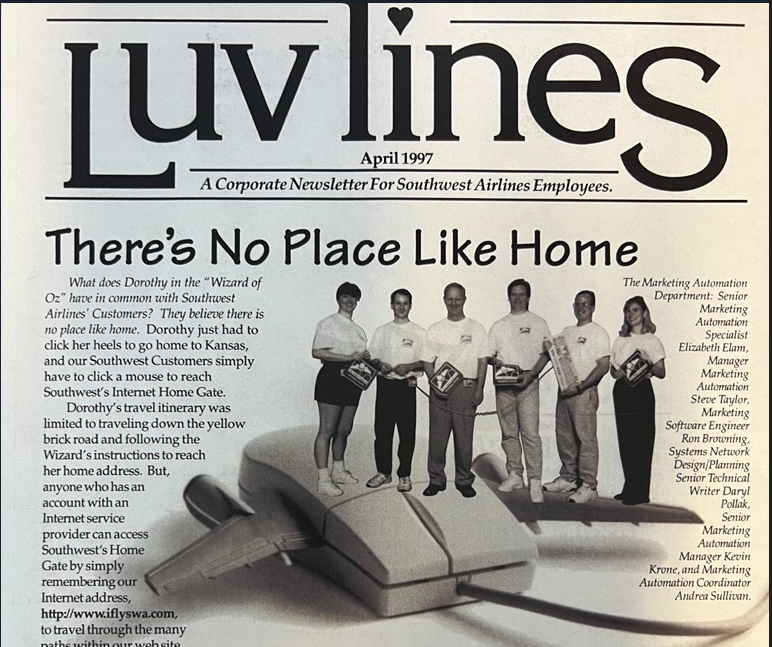
The small and mighty team of Employees that worked on Southwest’s first website.
Southwest’s immediate response was hands-on—literally.
Employees mobilized across the Company, creating and delivering paper tickets by hand, routing them through mail and courier services to keep Customers moving. It was scrappy. It was imperfect. But it worked—giving the airline just enough time to develop a solution.
While there were Employees handling the immediate crisis, behind the scenes, a smaller team was thinking beyond the moment. If the old systems could be taken away overnight, what would it look like to build something no one else controlled?
The answer wasn’t obvious yet. But one option stood apart: the emerging internet. It wasn’t polished or proven, but it was free and open.
A Different Kind of Gate
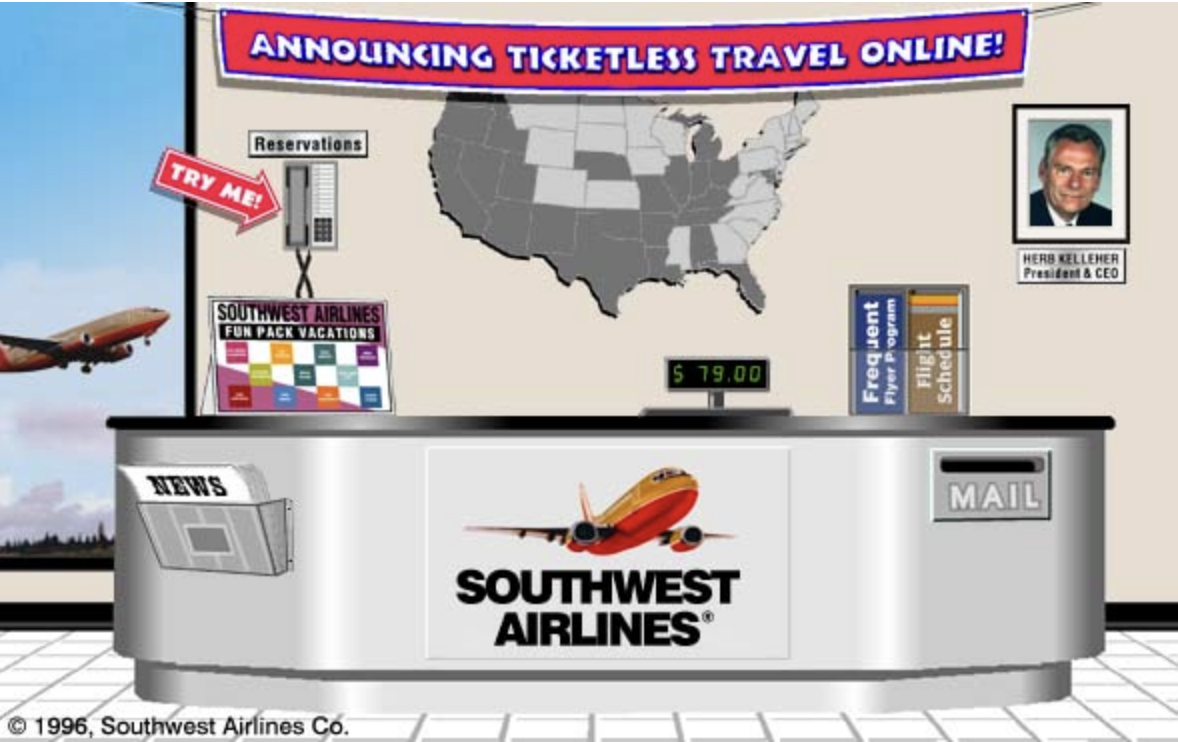
Screenshot of Southwest’s original website, iflyswa.com
In March 1995, Southwest launched our first website—internally dubbed the “Home Gate.”
It wasn’t built with scale in mind. At first, it wasn’t even transactional since Customers still had to call Southwest to book. But it represented something far more important than features—it was a foothold within something new.
Built by a handful of Employees gathered around a single table, the early site was less about design and more about forging a new direction. While the rest of the industry doubled down on closed distribution channels, Southwest made a different bet—that the future of travel would be direct, digital, and accessible.
Within a year, Customers could book flights online via iflyswa.com.
That shift—from indirect to direct sales—changed everything.
When Constraint Becomes Strategy
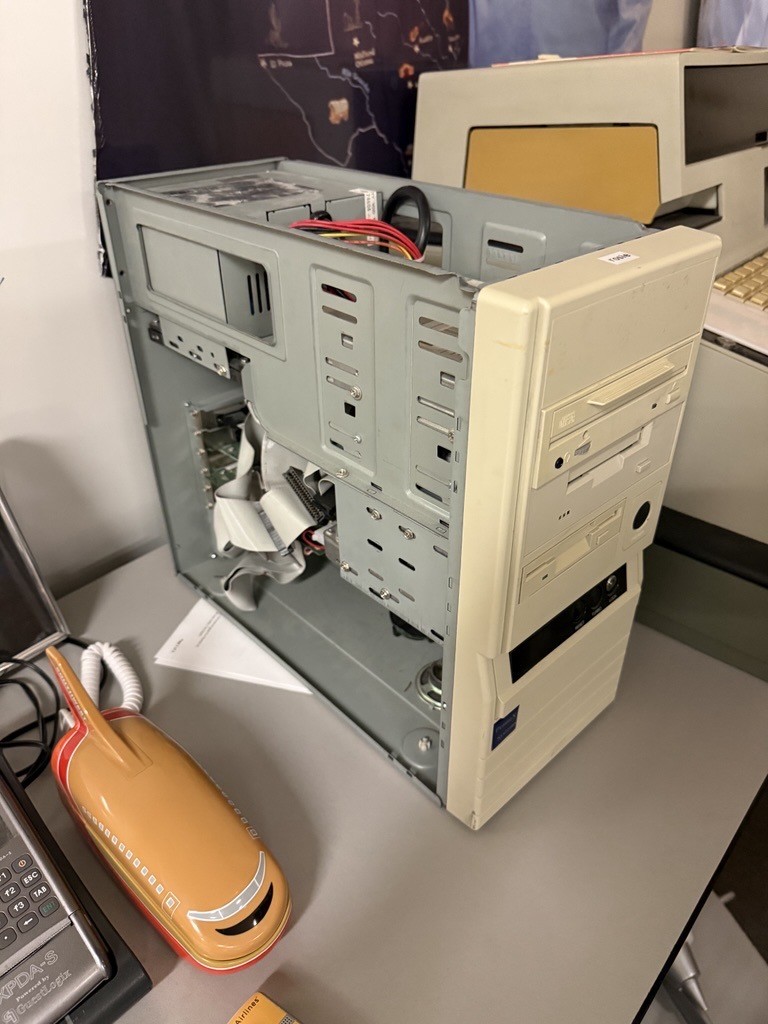
Southwest’s original internet server. The case was removed to prevent the unit from overheating and was inadvertently thrown away.
In hindsight, the inflection point is clear.
What began as an emergency workaround became one of Southwest’s biggest strategic advantages.
The same competitors who boxed Southwest out of their ticketing systems unintentionally accelerated the airline’s independence from them. The same pressure that forced short-term improvisation sparked long-term innovation.
And as the internet matured, so did Southwest’s presence within it.
Southwest.com didn’t just grow—it scaled alongside the business itself, becoming a primary connection point between the airline and its Customers. It reshaped how trips were planned, how relationships were built, and how the brand showed up beyond the airport.
It turned distribution into ownership.
30 Years Later, Still Southwest’s Front Door
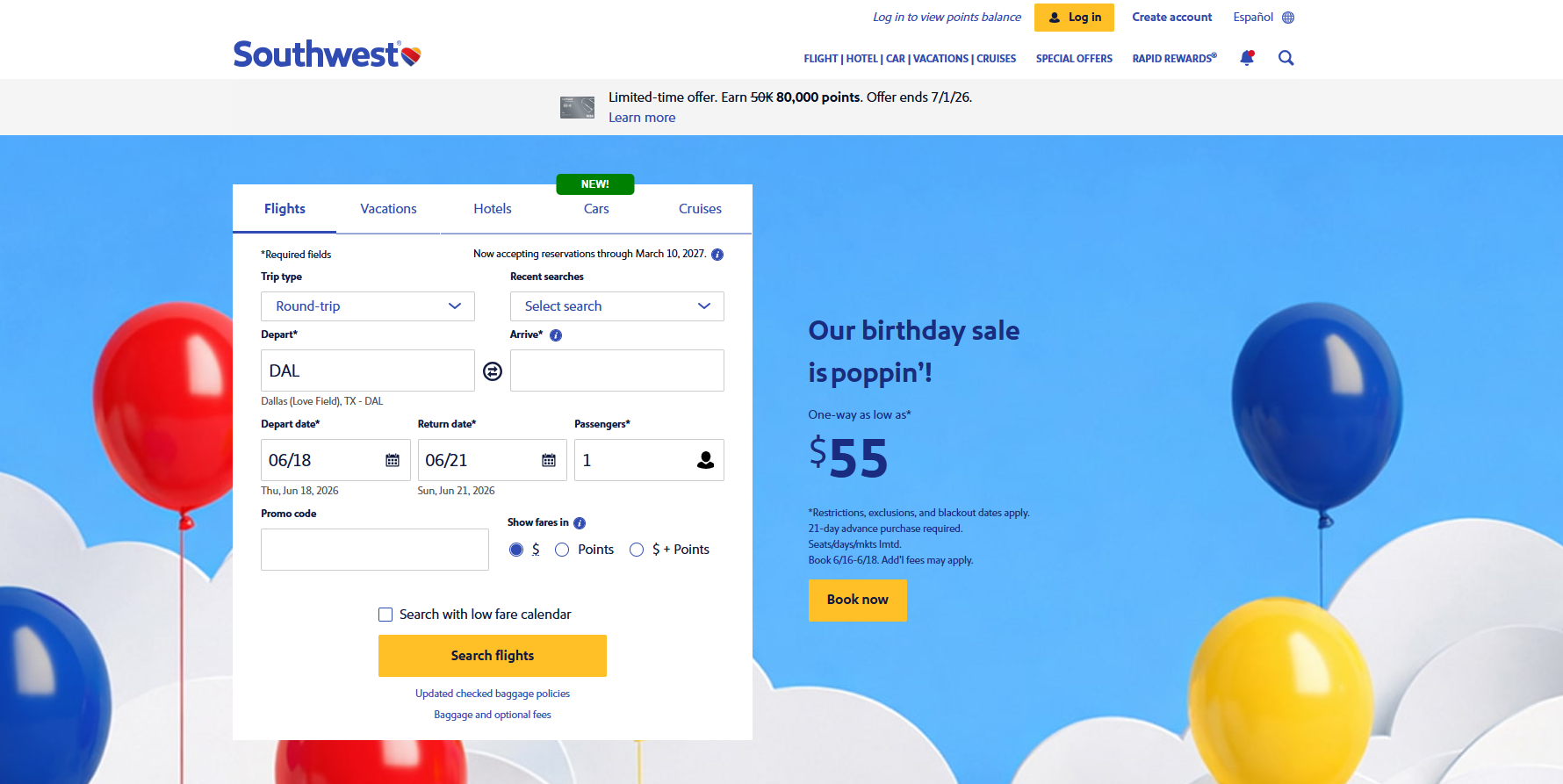
Today’s Southwest.com
Today, Southwest.com is no longer an experiment—it’s vital infrastructure.
As we mark the 30th anniversary of being able to book via the website, its role is both visible and deeply embedded. It’s where Customers search, book, manage, and explore. It’s where the brand lives in real time. It’s where Customer’s travel decisions and their relationship with Southwest start.
It is, in every sense, the Company’s front door.
But more importantly, it remains a growth engine—powering the business, enabling new offerings, and continuously evolving alongside Customer Expectations.
As Lauren Woods, Senior Vice President and Chief Information Officer, puts it:
“Southwest.com isn’t just a website—it’s how our Customers connect with us every day and a key driver of how we continue to innovate and evolve.”
Her point is simple—and telling.
This isn’t a legacy platform. It’s a living one.
The Pattern That Repeats
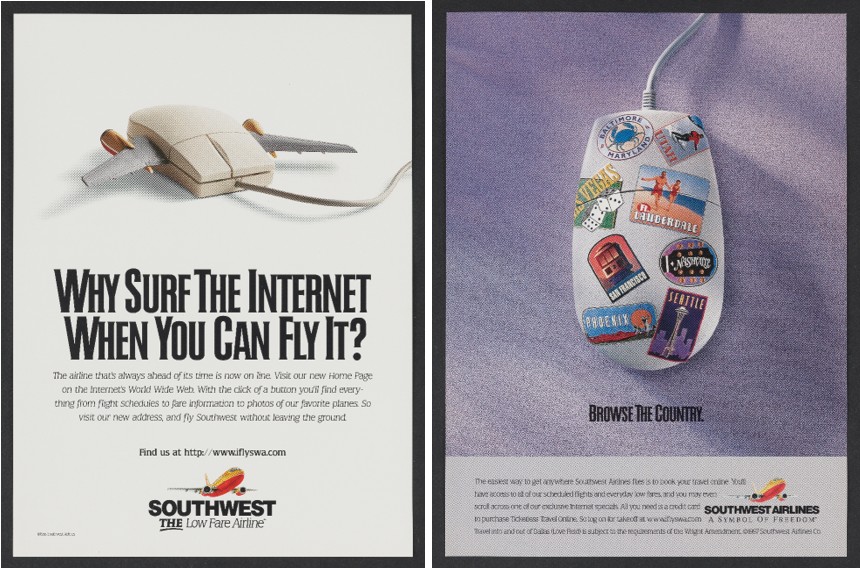
Vintage Southwest ads promoting booking through www.iflyswa.com
If the origin story of Southwest.com feels familiar, it should.
Pressure leads to clarity.
Constraints force creativity.
And moments of disruption become moments of definition.
We’ve seen it before—in ticketless travel, in network expansion, in every major evolution the Company has navigated.
The creation of Southwest.com follows the same pattern.
It wasn’t built because everything was going right.
It was built because something had to change.
More Than a Milestone
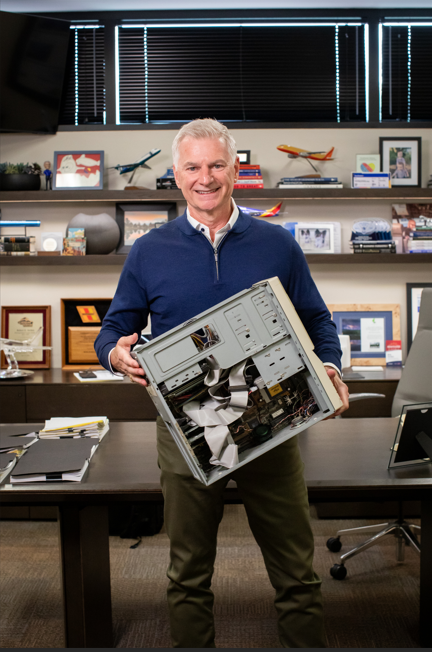
Southwest CEO Bob Jordan with Southwest’s original internet server
Anniversaries tend to invite nostalgia. This one invites something else: perspective.
Thirty years ago, a small team built a simple site to solve an immediate problem. They couldn’t have known it would become one of the Company’s most powerful assets.
But they did understand one thing clearly—
If you want to control your future, you have to build it yourself.
Southwest.com is proof that Southwest did exactly that.
And if history is any guide, we’re still just getting started.