















































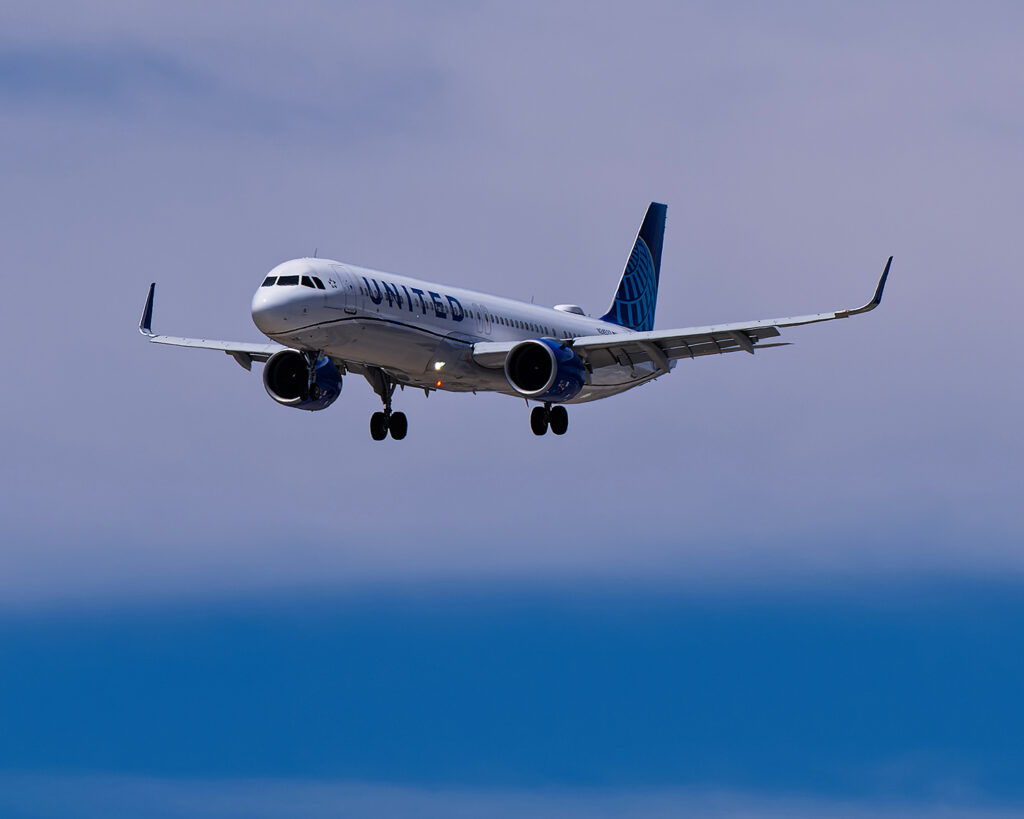
United flight attendants have a contract provision entitling them to premium economy when business class is unavailable on a deadhead. They are not getting it. The Association of Flight Attendants filed a grievance, lost at arbitration, then negotiated two successive contracts without fixing the problem. On September 24, AFA sent members a notice explaining why.
The language at issue is in Section 3.H.8 of the 2026 agreement. On three-class aircraft, flight attendants are to be booked in business class when available. If business is not available, the contract reads, the flight attendant will be booked in premium economy.
The problem is timing. That language predates United’s 2018 launch of Premium Plus, its true premium economy product — wider seats, better recline, meals, dedicated amenities. Economy Plus, by contrast, is an economy seat with added legroom. United has been booking deadheading flight attendants into Economy Plus, not Premium Plus, treating the business cabin as the only separate class above economy for this purpose.
AFA challenged that practice. The arbitrator ruled against the union in April 2022. According to the union’s own account of that ruling, the arbitrator found a gap between the contract language and the product that existed when the language was written. The parties hadn’t contemplated a new premium cabin when the agreement was drafted, and the evidence presented suggested they hadn’t intended to guarantee access to whatever product United might introduce above economy in the future. The arbitrator declined to add a benefit the parties hadn’t agreed to, regardless of what the plain language appeared to say.



The union’s September 24 notice argues that United remains a two-class airline for this purpose, treating Premium Plus as part of the economy cabin. That is a difficult position to square with the union’s own 2022 description of Premium Plus as a new “class of service,” or with the fact that United markets it as a separate cabin with a separate fare.
Under the current booking order, when business class is not available, United books flight attendants into Economy Plus aisle seats first, then Economy Plus window seats, before Premium Plus comes into the rotation at all. Upgrades to Premium Plus are available by seniority after initial assignments are made. So flight attendants can end up in Premium Plus, but only after Economy Plus seats are exhausted.
What makes this notable beyond the cabin-booking mechanics is what happened during contract negotiations. Flight attendants rejected United’s first offer. The union went back to the table. Neither round of bargaining addressed the arbitration loss. AFA’s September notice says the issue was not a priority.
For flight attendants deadheading transatlantic — a common occurrence on United’s wide-body network — the difference between Economy Plus and Premium Plus is significant in terms of rest, seat width, and meal service. Whether that tradeoff against other contract gains was the right call is a question the union has not answered directly. AFA’s notice does not claim fixing the premium economy provision would have been prohibitively expensive in terms of bargaining leverage or other priorities secured.