



















































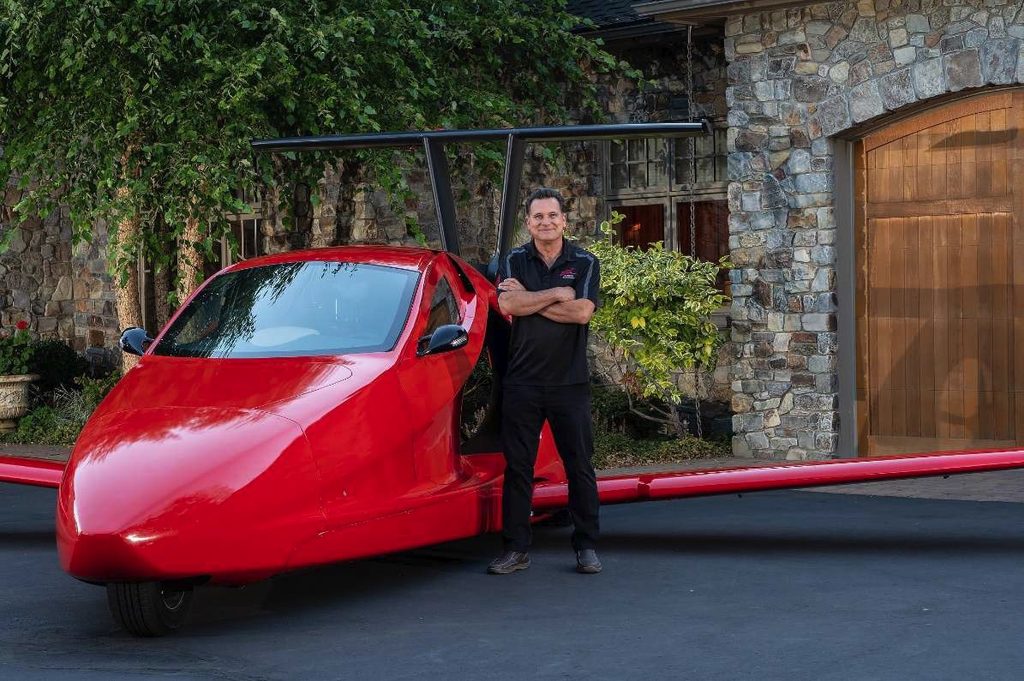
Prineville, Oregon — Officials at Samson Sky, developer of the Switchblade Flying Car, say the tremendous public attention surrounding Tesla’s flying Roadster reveal underscores a growing global interest for flying cars.
“For decades people have been fascinated by the idea of flying cars, but there are several important questions that savvy consumers may want to consider,” said Sam Bousfield, Founder and CEO of Samson Sky. “The first is whether a flying car can legally take off from a public road. In the United States and most developed countries, the answer is ‘no’. Federal Aviation Administration (FAA) regulations require aircraft to take off and land at airports or designated landing facilities.”
According to Bousfield, consumers evaluating flying car technology should also consider several other key factors:
- Can it operate within current regulations and infrastructure?
- Can it be driven on highways and local roads?
- Are the wings, tail, and propellers fully enclosed and protected while driving?
- Is it insurable?
- Can it fit in a residential garage?
- Does it utilize an established system of vehicle and aircraft licensing and registration?
- Is it offered at a reasonable price point?
“The Switchblade checks all of the boxes,” said Bousfield. “That is likely one reason why Samson Sky has attracted reservation holders in more than 50 countries and across all 50 U.S. states.”




The Switchblade Flying Car is a hybrid-electric vehicle designed to both drive and fly. Accommodating two occupants plus luggage, it can be driven on local roads and highways to a nearby airport, where it transforms from driving mode to flight mode in less than three minutes at the push of a button. Upon arrival at an airport near the destination, the vehicle converts back to driving mode and continues the journey on the road.
Company officials note that the emerging flying car market generally falls into two categories. The first consists of electric Vertical Takeoff and Landing (eVTOL) aircraft, which typically operate between airports and dedicated vertiports and are designed for shorter urban or suburban trips. The second category is represented by vehicles intended for regional transportation, combining both driving and flying capabilities to enable longer trips of approximately 300 to 500 miles, using existing airport infrastructure.

“Understanding the distinction between the two major types of flying cars is important,” said James Mauch, serial entrepreneur and Samson Board Member. “While eVTOL aircraft are primarily focused on short-range transportation, whereas roadable aircraft such as the Switchblade are designed to address regional travel by integrating seamlessly with existing roads and airports.”