




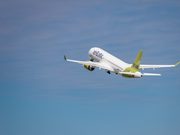






































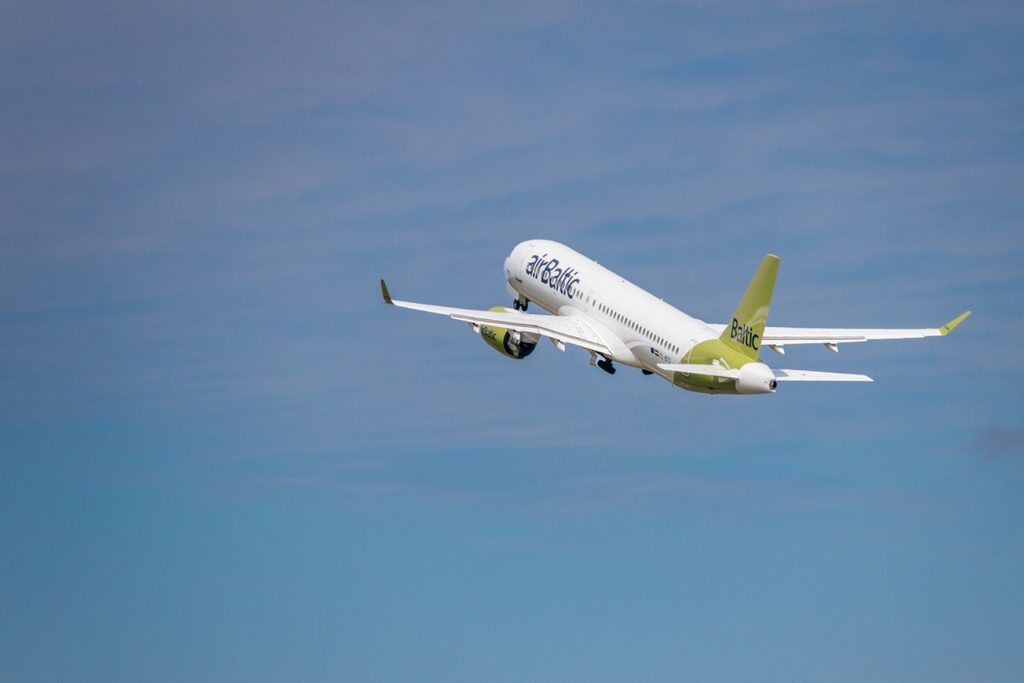
Riga. The Latvian national airline airBaltic has published its unaudited financial and operational results for the third quarter (Q3) and the first nine months (9M) of 2026. During the period, airBaltic recorded higher revenue, driven by growth in passenger revenue, higher yields and ACMI (Aircraft, Crew, Maintenance and Insurance) operations. At the same time, elevated jet fuel prices following the conflict in the Middle East, higher carbon emission allowance costs and increased operating expenses associated with capacity growth continued to weigh on profitability.
In Q3 2026, airBaltic reported revenue of EUR 284.5 million, up 16.3% year-on-year. The increase was supported by higher ticket yields, passenger volumes and ACMI activity. airBaltic carried 1.59 million passengers on its own network, up 2.8% year-on-year, while total flights, including ACMI operations, grew by 16.5% to 27.8 thousand.
Fuel costs rose by 55.3% year-on-year in Q3 2026, while carbon emission allowance costs also increased and personnel costs rose in line with increased capacity. Airspace restrictions related to the conflict in the Middle East led to longer routings on certain services, and flights to Dubai remained suspended. As part of the capacity optimisation programme, approximately 4,700 flights, or 7.4% of the originally planned 2026 schedule, have been cancelled for the period from March to December.
Adjusted EBITDAR amounted to EUR 58.4 million in Q3 2026, compared to EUR 77.7 million a year earlier, and airBaltic recorded a net loss of EUR 26.6 million, compared to a profit of EUR 6.0 million in Q3 2025.




Erno Hildén, President and CEO of airBaltic: “The third quarter reflected both the strengths and the challenges of our current operating model. Demand for our services remained steady, and improved fleet availability allowed us to increase activity across our network and ACMI operations. However, revenue growth has not translated into stronger profitability, primarily due to exceptionally high jet fuel prices, while also highlighting the need to address our cost structure and financial commitments. The restructuring process initiated in September is an important step in this direction. Our focus is now on building a more efficient and financially sustainable airline, while preserving the connectivity that airBaltic provides for Latvia and the wider Baltic region.”
| Financial Performance | Q3 2026 | Q3 2025 | Change |
|---|---|---|---|
| Revenue | EUR 284.5 million | EUR 244.7 million | 16.3% |
| Adjusted EBITDAR | EUR 58.4 million | EUR 77.7 million | EUR -19.3 million |
| Adjusted EBITDA | EUR 54.0 million | EUR 65.4 million | EUR -11.4 million |
| Net profit / -loss | EUR -26.6 million | EUR 6.0 million | EUR -32.5 million |
| Operational Performance | Q3 2026 | Q3 2025 | Change |
|---|---|---|---|
| Total passengers (including ACMI operations) | 3.21 million | 2.80 million | 14.3% |
| Network passengers | 1.59 million | 1.54 million | 2.8% |
| Total flights (including ACMI) | 27.8 thousand | 23.9 thousand | 16.5% |
| Network flights | 14.1 thousand | 13.4 thousand | 5.1% |
| ACMI flights | 13.7 thousand | 10.5 thousand | 31.0% |
| Load factor (%) | 82.5% | 84.6% | -2.1pp |
Turning to the results for the first nine months of 2026, airBaltic generated revenue of EUR 683.6 million, up 15.0% year-on-year. Passenger revenue increased by 7.7%, while ACMI lease revenue rose by 36.8%. airBaltic carried 4.04 million passengers on its own network, up 3.5% year-on-year.
Higher operating costs, primarily fuel, contributed to lower profitability, with adjusted EBITDAR at EUR 92.4 million, compared to EUR 128.6 million in the same period of 2025. airBaltic recorded a net loss of EUR 154.8 million, versus a profit of EUR 4.2 million a year earlier. The year-on-year difference was also significantly affected by foreign exchange movements, as a gain of EUR 67.2 million in 9M 2025 shifted to a net foreign currency exchange loss of EUR 24.1 million in 9M 2026. Higher depreciation following fleet growth and increased financing costs also contributed to the loss.
In total, airBaltic operated 70.1 thousand flights in the first nine months of 2026, up 16.3% year-on-year. Network flights increased by 5.0% to 38.1 thousand, while ACMI flights grew by 33.3% to 32.0 thousand. An average of 25 aircraft were leased out in Q3, compared to 19 a year earlier. The passenger load factor was 79.2%, compared to 80.5% in 9M 2025.
| Financial Performance | 9M 2026 | 9M 2025 | Change |
|---|---|---|---|
| Revenue | EUR 683.6 million | EUR 594.3 million | 15.0% |
| Adjusted EBITDAR | EUR 92.4 million | EUR 128.6 million | EUR -36.2 million |
| Adjusted EBITDA | EUR 81.1 million | EUR 113.5 million | EUR -32.4 million |
| Net profit / -loss | EUR -154.8 million | EUR 4.2 million | EUR -159.0 million |
| Operational Performance | 9M 2026 | 9M 2025 | Change |
|---|---|---|---|
| Total passengers (including ACMI operations) | 7.65 million | 6.67 million | 14.7% |
| Network passengers | 4.04 million | 3.90 million | 3.5% |
| Total flights (including ACMI) | 70.1 thousand | 60.3 thousand | 16.3% |
| Network flights | 38.1 thousand | 36.3 thousand | 5.0% |
| ACMI flights | 32.0 thousand | 24.0 thousand | 33.3% |
| Load factor (%) | 79.2% | 80.5% | -1.4pp |
On 14 September 2026, airBaltic filed for reorganisation under Chapter 11 of the United States Bankruptcy Code. The restructuring covers the airline’s fleet, network, cost base and balance sheet, and management’s objective is for the plan of reorganisation to become effective before the end of the second quarter of 2027. Throughout the process, airBaltic continues to operate flights in its current schedule, and tickets and bookings remain valid.
The full report is available here: https://investors.airbaltic.com/en/
About airBaltic:
airBaltic (Air Baltic Corporation AS) is the Latvian flag carrier and a leading airline in the Baltic States, connecting the region with destinations across Europe and beyond. The company is majority-owned by the Latvian State, holding 88.37% of voting rights, with Deutsche Lufthansa AG holding 10% and the remaining 1.63% owned by private shareholders. Founded in 1995, the airline operates a modern and one of Europe’s youngest fleets of Airbus A220-300 aircraft. In 2025, airBaltic became the first European airline to introduce free high-speed SpaceX Starlink internet onboard its flights.
airBaltic has received numerous international awards recognizing its safety, service quality, innovation, and sustainability. In 2026, the airline was named among the world’s 50 safest airlines by Airline Ratings for the second consecutive year. The same year, APEX awarded airBaltic the Five Star Major Airline Award for its high-quality travel experience and Best Wi-Fi in Europe Award. In 2025, Airline Ratings recognized airBaltic as a global leader in sustainability and one of the most preferred airlines in Europe and the UK. airBaltic has also been named Best Airline in its region by Skytrax for three consecutive years.