






















































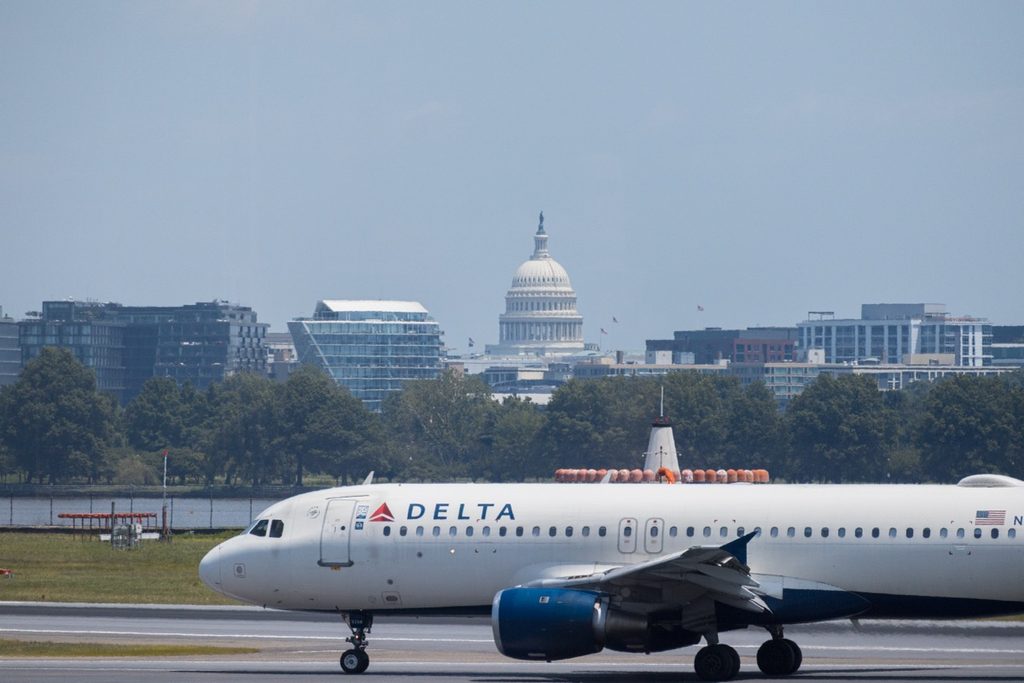
The FAA has begun a soft launch of a new artificial intelligence platform at Reagan National, Dulles International, and Baltimore/Washington International airports, with the rollout starting at the FAA Air Traffic Control System Command Center in Warrenton, Virginia.
The system is called SMART — Strategic Management of Airspace, Routes and Trajectories. It analyzes airline schedules, airport capacity, weather conditions, and operational constraints to predict traffic flows and flag potential conflicts before they develop. The goal is delay reduction and improved system-wide traffic performance.
SMART is part of a nearly $900 million FAA technology contract. The pilot program is expected to run 90 days, according to Politico. A broader nationwide rollout is planned for fall 2026.
The FAA has been explicit that SMART will not replace human air traffic controllers, who retain responsibility for aircraft separation. The system is also not designed to direct flight changes — AI-generated recommendations will be disseminated from Warrenton, but controllers work the traffic.




For crew, the practical near-term effect is limited. SMART operates at the traffic flow management level, not at the sector or clearance level. If the system performs as advertised, the downstream benefit would be fewer ground stops and miles-in-trail restrictions driven by demand-capacity imbalances — the kind of delays that stack up at DCA, IAD, and BWI given their traffic density and proximity to restricted airspace.
Rep. Don Beyer (D-Va.) has called on the FAA to suspend the program, characterizing DC-area travelers as “guinea pigs” for the technology ahead of a national rollout. The FAA has not indicated any pause is planned.