
















































My flying career started about five years ago. Though my first flight as a pilot was the previous September, I started flight training for real in July 2020 in the midst of the COVID-19 pandemic. I was entering my sophomore year in college and as eager as ever about pursuing life as a professional pilot.
My journey from student pilot to professional flight instructor has been long and somewhat winding. I flew at multiple schools in the Chicagoland area as a student before heading to South Florida, then picking up my first job in Central Florida before moving to Pennsylvania.
Throughout that time, I had opportunities to work with a variety of instructors (only one CFI ever signed me off for more than one checkride), in a variety of training systems, and with a range of supervisors and colleagues. This variety has allowed me to not only expand my piloting skills but also learn what it means to be a professional in the aviation industry.
As a college student, timeliness was a challenge for me. I will never forget what might have been the most important lesson I had received from an instructor to that point. She (a former flight attendant with multiple carriers) gave me an appropriately strongly worded talk about the importance of timeliness in the aviation industry. I needed to hear it, and it fundamentally changed when I arrived for lessons and how I communicated with instructors into the future. That lesson has influenced how I have handled the few times I’ve been tardy since, and how I have conducted myself as an instructor.




One of my early instructor positions was with a company that required instructors to arrive at least 15 minutes before their first lesson of the day. They also told new CFIs applying to work for them that part of their duty was to effectively time manage their lessons to make sure they were on time for the next flight.
This tenant is an important part of the company’s belief that their employees are not only representing themselves and the company but also the aviation industry. As a school that focuses heavily on career pilot training, they wanted to convey to new students that having a professional image (including not only timeliness but also grooming and dress) was critical to establishing a reliable, trustworthy image that would eventually translate to employment down the line.
Though my time with the company was short-lived, the lessons stuck: carrying myself in a confident manner, being well-groomed and well-spoken, have become significant goals as I continue teaching and looking ahead to other jobs in the industry. Communicating effectively with students, and being crystal clear about my plans and expectations, are key to establishing a strong foundation and maintaining a trusting relationship.
I have spent the last few months teaching in central Pennsylvania at an airport with commercial airline service. Operating around transport-category jets operating for major U.S. carriers adds an additional requirement for attentiveness and professionalism. Many of the airports I used while teaching in Florida had significant corporate-jet and flight-school traffic that required focus and efficiency, it has become important to consider how working airline transport into the mix impacts my own flying.
Obviously, working in environments dependent upon quick, efficient flight tasks and commercial airport operations requires an additional level of preplanning and situational awareness when compared to the smaller, often uncontrolled airports at which I’ve operated for quite some time. No longer is the time when my FBO was the largest operator at my airport, Now the bar is higher. Now, I must be clearer on the radio, more prepared for adjustments, and ready to explain and correct. These are added elements that I once did not need to worry about.
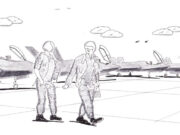
Moving on to the airlines will elicit a further “upgrade” to my professionalism. Walking around big airports in a recognizable uniform will bring more attention, therefore mandating that I be more on top of my game and more aware of myself and my environment. In my current role as IP, my student’s trust in me depends, in no small part, on my ability to carry myself with poise and focus. Beyond this, to an incalculable extent and arguably now more than ever, the public’s trust in the aviation industry is influenced by these same qualities of professionalism.
As with most, admittedly, I have room to grow. Many are familiar with the saying, “A good pilot is always learning.” Learning not only about professionalism but also being open to learning about my craft and expanding my skills and proficiency will expand my ability to teach and fly safely—day in and day out.
I am lucky that I do something that I so dearly love. That love pushes me to act with pride and represent myself well. My desire to learn, grow, and act in a way that demonstrates my passion forms the foundation of what professionalism means to me. My goal throughout my career is to allow my personal obsession with aviation continually feed how I handle my professional career—and vice versa.