















































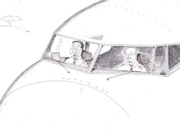







Over the years of my flight training, I have heard of various ways that different operators make sure their pilots can work effectively as a crew. Some, for example, limit the types of conversations that go on in the cockpit to prevent personal conflict from bleeding into professional duties. Oftentimes, crews make a point of spending time together outside of work as well: they buy dinner or get drinks to spend time getting to know each other and building camaraderie.
I find it essential to take similar steps in my job as a flight instructor. Over 18 months working in Central Florida, I had the opportunity to train many wonderful students. These students occupied each point of political, social, and religious spectrums. Some were incredibly wealthy while others could only afford one or two flights per month; many shared their strong opinions, positive or negative, about prominent elected officials and their decisions.
To provide effective training, and to ensure that my students and I trusted each other to communicate effectively about our performance and each real-life situation, I had to make sure I was relating to each student.
This often entailed taking the time to get to know each one on a personal level. If I don’t hear about their university studies or day jobs, I must make a point to ask; I am equally interested in family lives, aviation goals, and even favorite teams. By building strong personal foundations with students, we have a base level of trust that allows us to be open and honest with each other. It also allows instructor and student to work together as a strong team in situations that, to ensure safety of flight, we must operate more as a crew then instructor/student.





Equally, I have taught myself to be neutral on a number of key points regarding current events. Intentionally, I do not share political leanings. When students ask about major accidents or incidents, I focus on objective fact instead of speculating in ways that may alienate students in one way or another.
This is a topic I go over with flight instructor applicants, particularly those who plan to work in the aviation industry long term. Flight instructors must discuss risk management, and I encourage these instructors-to-be to consider how to approach each student in a way that allows for trust and transparency.
As with my students, I consider how to make myself a “crew” with fellow flight instructors. As we look to each other for support—ask clarifying questions, request mock checkrides, and transfer long term students—we must be comfortable enough to trust each other’s skills and training. The better I know my coworkers and their relationships with their students, the more easily I can offer assistance. For example, if they need a student covered for a weekend, I will be able to focus on precisely what their students need at each stage. Conversely, the better my coworkers know me, the more I can trust that they, for example, will conduct mock checkrides with focus on the particular areas I prefer.
Strong connections even come in handy when I need flight reviews or instrument proficiency checks, as strong relationships make it that much easier to coordinate.
In every capacity, I find it helpful to handle myself in a way that builds trust between myself and both my students and coworkers. With a baseline of trust, I find the training environment to have a greater likelihood of success: not only with checkride passes but also by creating strong safety habits that will endure through the years to come.