








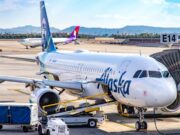








































A couple of months ago when I shared a story about cells phones and non-compliance on airliners, it seems we unintentionally started a short series of what passengers are and are not entitled to. Now, we’re continuing with what passengers receive in exchange for purchasing an airline ticket, and it’s probably less than you think.
To get started, we need to define contract of carriage.
A contract of carriage (sometimes called condition of carriage) is a legally binding agreement between the air carrier and a passenger who buys a ticket, that outlines the rights, responsibilities, and liabilities of both parties. Each time you buy a ticket on an airline, you implicitly agree to the contract of carriage, because it is literally the small (although tiny is probably a better description) print stuff that frankly nobody but airline attorneys ever read.
Features of the contract of carriage include rights and liabilities; what the carrier is responsible for, including what happens if there are service delays or damages to cargo and baggage, as well as terms and conditions including rules for passengers, baggage policies including limits and fees, check-in deadlines, cancellation and refund procedures, denied boarding compensation, etc. And there’s always a force majeure clause (sometimes referred to as acts of God) that suspend airline liability for uncontrollable and/or unforeseen events. A recent example of this was the widespread outbreak of violence in Mexico after the army killed the Jalisco New Generation Cartel leader, Nemesio Oseguera Cervantes, aka El Mencho. For tourist and air travelers, the results were broad flight cancellations due to security concerns, which was beyond the control of the airlines. At the same time, a massive snowstorm in the northeastern U.S. shut down New England airports for several days. Also beyond the control of the airlines.


Most people believe that when they purchase an airline ticket, they are in possession of an ironclad guarantee of service, presumed to be a specific seat, on a specific flight at a specific time to a specific destination. Although it mostly works out this way (mostly because it’s in the airlines’ best interest to make it happen accordingly), you are not, in fact, entitled to or guaranteed any of this. While the airline will generally do its best to accommodate the assumed purchase conditions of the ticket, due to contract of carriage (which you agreed to when you purchased it), the ticket really only confirms your reservation. In this way, the ticket really functions more like OpenTable*, rather than your own personal Magna Carta.
Contracts of carriage (which have been affirmed by court decisions up to and including the Supreme Court) generally allow airlines to change seat assignments, substitute aircraft, or deny boarding due to overbooking, safety, or operational requirements. So, your ticket does not guarantee you a specific seat or even a seat on a particular flight, despite some individuals’ misconception that they now own that seat for the low, low price of $129 taking them from Denver to Kanas City, on August 12th at 3pm.
To summarize, contract of carriage provides a legal framework ensuring both parties understand their obligations, rights, rates, and the limits of liability before transportation occurs, and if anyone were to actually read the fine print, one would discover that there are far fewer entitlements than anticipated that go with that ticket. It is important to note however that despite being a binding document for the airline-passenger relationship, contract of carriage (written and established by each individual airline) may not substitute, omit, circumvent or conflict with federal regulations and guidelines such as those outlined in the Airline Passenger Bill of Rights (which we covered last month—in the May 2026 issue).
The practical reality of all of this is that with a U.S. airline you have a 78% chance of arriving at your intended destination within 15 minutes of your planned time, only a 1.3% chance of your scheduled flight canceling, and a mere 0.000001% chance of being involved in a fatal accident. By comparison, the average U.S. driver loses about 53 hours per year to traffic congestion, maintains a consistent one in 366 chance of being in a car accident for every 1,000 miles driven, and a 77% lifetime chance of being in at least one car crash.
Ok, we’re going to change topics next month so come back for some truly heavy discourse.
*OpenTable is a handy app that assists you with making reservations at restaurants in your area or in an area of your choosing. Grey Matter is not underwritten or compensated by OpenTable in any way.