
















































When flying in controlled airspace, especially under IFR, pilots interact regularly with two very different types of air traffic controllers: those at Terminal Radar Approach Control (TRACON) and those at Air Route Traffic Control Center (ARTCC). Both facilities are responsible for over 5,000 flights every day.
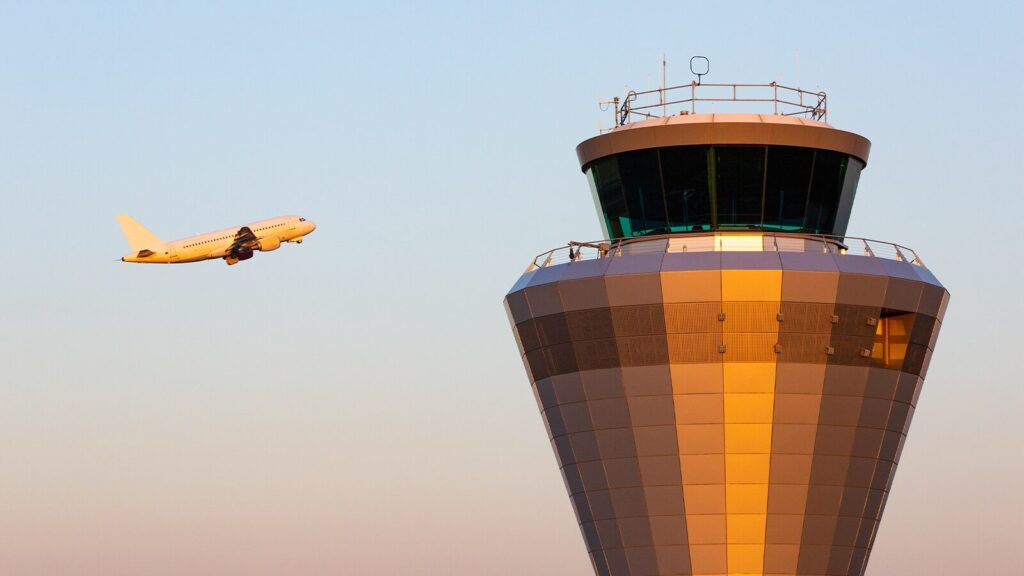
From a pilot’s perspective, TRACON controllers handle aircraft in the terminal area: after takeoff, during departure climb, and again on arrival, usually, traffic within 30 to 50 miles from the airport. Center controllers, on the other hand, handle enroute traffic at higher altitude sectors (above 24,000 feet). The United States has 22 Air Route Traffic Control Centers, and 27 Terminal Radar Approach Control facilities.
The most notable difference to a pilot is how the communication “feels:” From TRACON, they are fast-paced and tactical, constantly giving vectors, altitude changes, speed adjustments, and approach clearances. ARTCC is more procedural, focused on managing you along your route and maintaining separation over long distances.
Altitude management is another key differentiator. TRACON often uses hard altitudes (“Descend and maintain 3,000”). Controllers work within smaller airspace boundaries, with less vertical room to spare. ARTCC, on the other hand, might use step-climbs or even assign “pilot discretion” descents—especially on less congested routes.
Flight planning intersects with how TRACON and ARTCC operate. Flying into congested airspace with the proper instrument procedures filed (such as SIDs and STARs) can significantly reduce pilot and controller workload, particularly throughout the terminal area.
With respect to frequency management, operating in TRACON airspace involves often changing frequencies at a fast pace—tower to departure to approach within minutes. ARTCC may hold you on the same frequency for 200 miles, then switch you sector by sector. Newer technologies such as Controller Pilot Data Link Communications, commonly CPDLC, has allowed for reduced frequency congestion during a hand-off from an ARTCC facility to the next. However, given the complex nature of TRACON, radio voice communications between pilots and controllers still prevail in the terminal area.
The safe operation of a system as complicated as the NAS requires tremendous organization, coordination, and teamwork. Understanding the roles of TRACON and ARTCC is critical for pilots to successfully operate in the national airspace. TRACON is tactical—short-range, dynamic, rapid-fire, critical for departures and arrivals. ARTCC is strategic—long-range, enroute-focused, managing aircraft flow at scale. Every IFR flight plan is a coordinated relay between these two types of controllers, and knowing what each one expects of you—when, where, and how—will make you a safer, more effective pilot.