




















































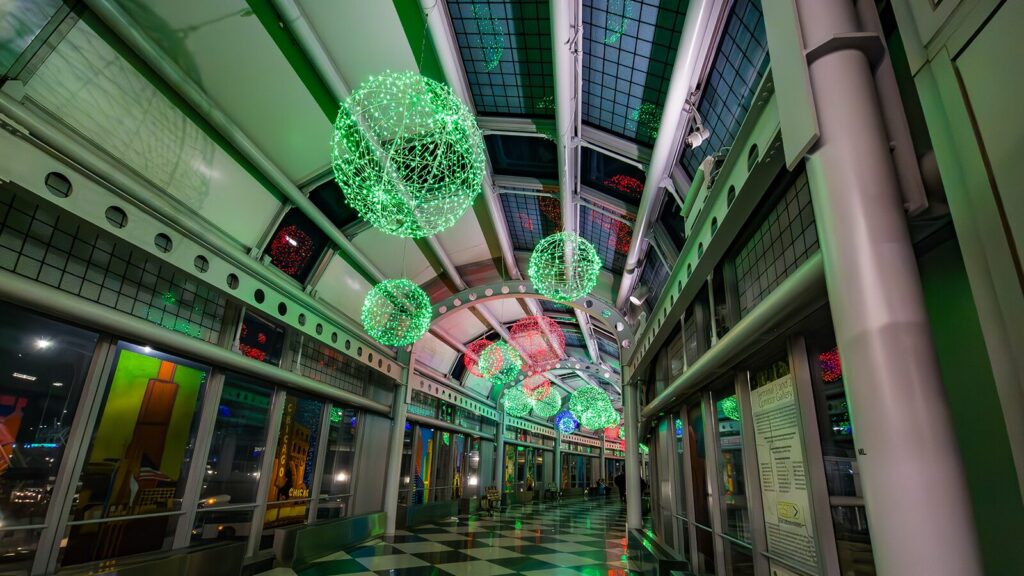
Editorial photo credit: Davslens Photography – stock.adobe.com
Like all flight crew, I spend a lot of time in a variety of airports. After years of working at and passing through many airports, a number of features stand out to me. These features often impact which airports I like more than others, and they can even indicate the age of a given airport or its terminal.
When I chat with travelers, I get a variety of comments about any number of airports. Some people notice how cramped a certain airport is or how long another’s security lines; food options, the conditions of restrooms, and the frequency (and severity) of delays also come up as people discuss how much they like or dislike any number of airports.
One feature has stood out to me over the years—how walkable and accessible an airport is. After all, I spend all my time onboard airplanes sitting, which after a time can cause restlessness, so the last thing I usually want to do at an airport is sit. If I have a big open area, after all, why not stretch my legs before I spend hours in a confined space? This is especially true for me during prolonged delays— being able to meander through a changing “landscape” is often an easy way to pass the time.
My first job in aviation was working ramp and customer service for a small commuter airline at Chicago’s O’Hare International Airport. With the exception of those in Terminal 5, used by the non-hub U.S. airlines and international operations, you can walk from one gate to any other in Terminals 1, 2, and 3. O’Hare is over a mile long from the tip of Terminal 1 to the opposite tip of Terminal 3 (don’t judge; I get bored), but you can walk anywhere within those points.




Some of my fondest memories working at O’Hare, besides watching Air Force One arrive and a few notable sunsets, involve walking to breakfast, snacks, or dinner with coworkers during shifts. The airport’s accessibility meant we could pick either a restaurant or a terminal with the best selection and be there within 20 minutes. To this day, I appreciate that I can get around ORD so easily whenever I pass through.
The Philadelphia International Airport is a similar case. I often find myself transiting between Terminal F, where regional flights operate, and the rest of the airport’s mainline flights. A shuttle service is offered between terminals, but walking is a viable option. Being able to loosen up and move my legs between long periods of sitting does me a great deal of good, especially transiting to or from long flights along the eastern U.S. coast or even across the country. It’s good for me physically and positively impacts my mood.
Chicago’s Midway Airport is a similar case, though on a much smaller scale. Midway consists of three concourses in one terminal, making it easy to catch connecting Southwest flights even if they are at opposite ends of the airport.
One airport I often use that breaks this mold is the Orlando International Airport. It arrangement is quite like big airlines’ “hub-and-spoke” model of operation—one main central area for check-in, TSA screening, and baggage claim, connected by trams to remote concourses that have a set of gates, restrooms, and a central food court. In theory, each unconnected (except by tram) concourse contains everything a passenger needs, each feels a little claustrophobic. I sense the relative containment compared with other airports’ vast walkways.
Orlando’s international terminal is a break from the trend of its domestic gates—it is bigger, has more open space, and a lot more natural light. You can clearly tell, though, that it is a much newer facility than the rest of the airport.
Walkable airports offer opportunities to make an airport great. I find it is often the underlying factor that makes airports’ other positive qualities possible. As my career continues, I will have plenty more opportunities to test out my opinion and decide how much I continue to appreciate being able to walk around airports.